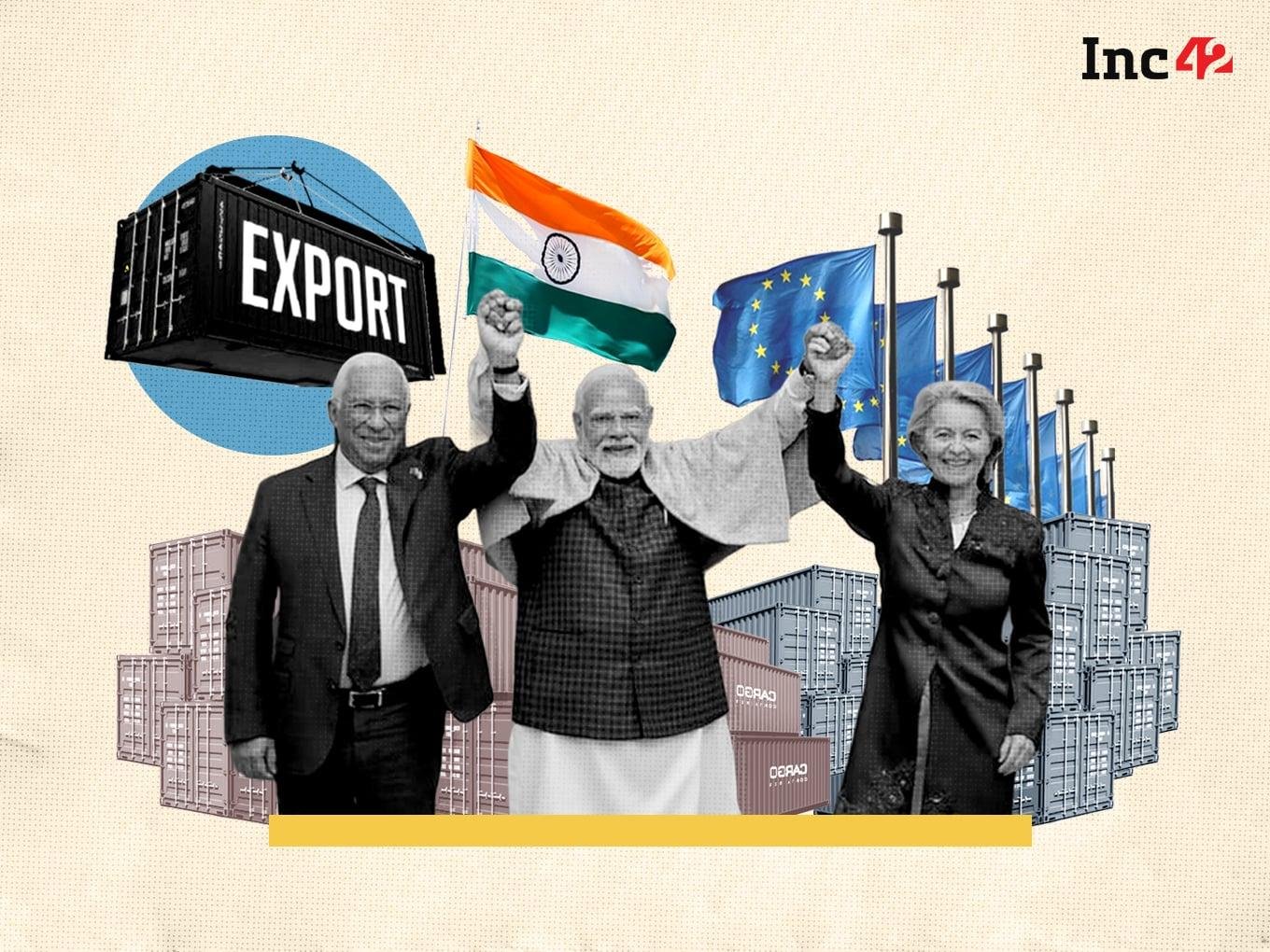
India’s trade relations with the United States hit a rocky patch last year after the North American nation imposed unilateral tariffs (up to 50%) on key Indian exports, including agricultural products, consumer goods, and select manufactured items. The high tariffs made it increasingly difficult for Indian exporters to maintain competitiveness in the US market, prompting New Delhi to explore alternative export avenues to diversify trade and safeguard economic growth. This strategic recalibration accelerated India’s engagement with the European Union (EU), culminating in the eighth Free Trade Agreement (FTA) for India on January 27 in the past five years. With a combined market valued at $24 Tn, the India-EU partnership will open up avenues for homegrown companies to expand their export footprint in the European region. The FTA provides immediate duty removal on 70% of tariff lines, which covers 90% of India’s exports across sectors such as textiles, leather, footwear, marine products, gems and jewellery, toys and sports goods. These sectors account for $33 Bn of exports from India. Meanwhile, gradual duty reductions over three to ten years will cover sectors like processed foods and certain marine products. However, India has safeguarded sensitive sectors like agricultural and dairy products. This preferential… Read MoreInc42 Media