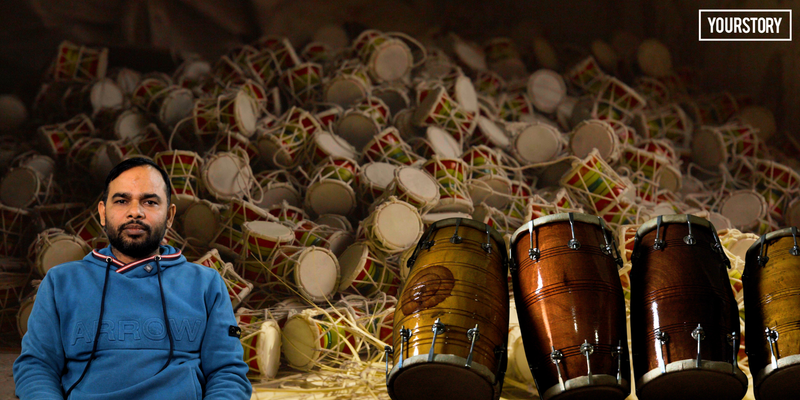
In Amroha, Uttar Pradesh, the dholak is more than a musical instrument. It is a working product, one that moves seamlessly through homes, temples, wedding processions, neighbourhood gatherings, and festival grounds across India. In doing so, it quietly sustains an entire local craft economy.The story of Amroha’s dholak begins with wood. For generations, artisans have favoured mango wood for the drum’s frame shaped into a hollow body that is lightweight, well-balanced, and strong enough to withstand tension. Older craftsmen still recall a time before electricity and machines, when work unfolded in orchards and modest sheds, using only hand tools. Small teams would often spend an entire day shaping just a single wooden shell.While workshops today may have access to basic machinery, the handmade nature of the dholak remains intact. Rajeev Kumar Prajapati, who runs Ram Musical Handicraft and is associated with local craft bodies, explains that machines may assist certain stages, but the instrument still relies overwhelmingly on skilled hands. By his estimate, nearly 90–95 per cent of the process continues to be manual.Production moves in deliberate stages. Logs are cut into smaller sections, stripped of bark, shaped on a rotating setup, hollowed from within, and then painted. What follows is… Read MoreYourStory RSS Feed