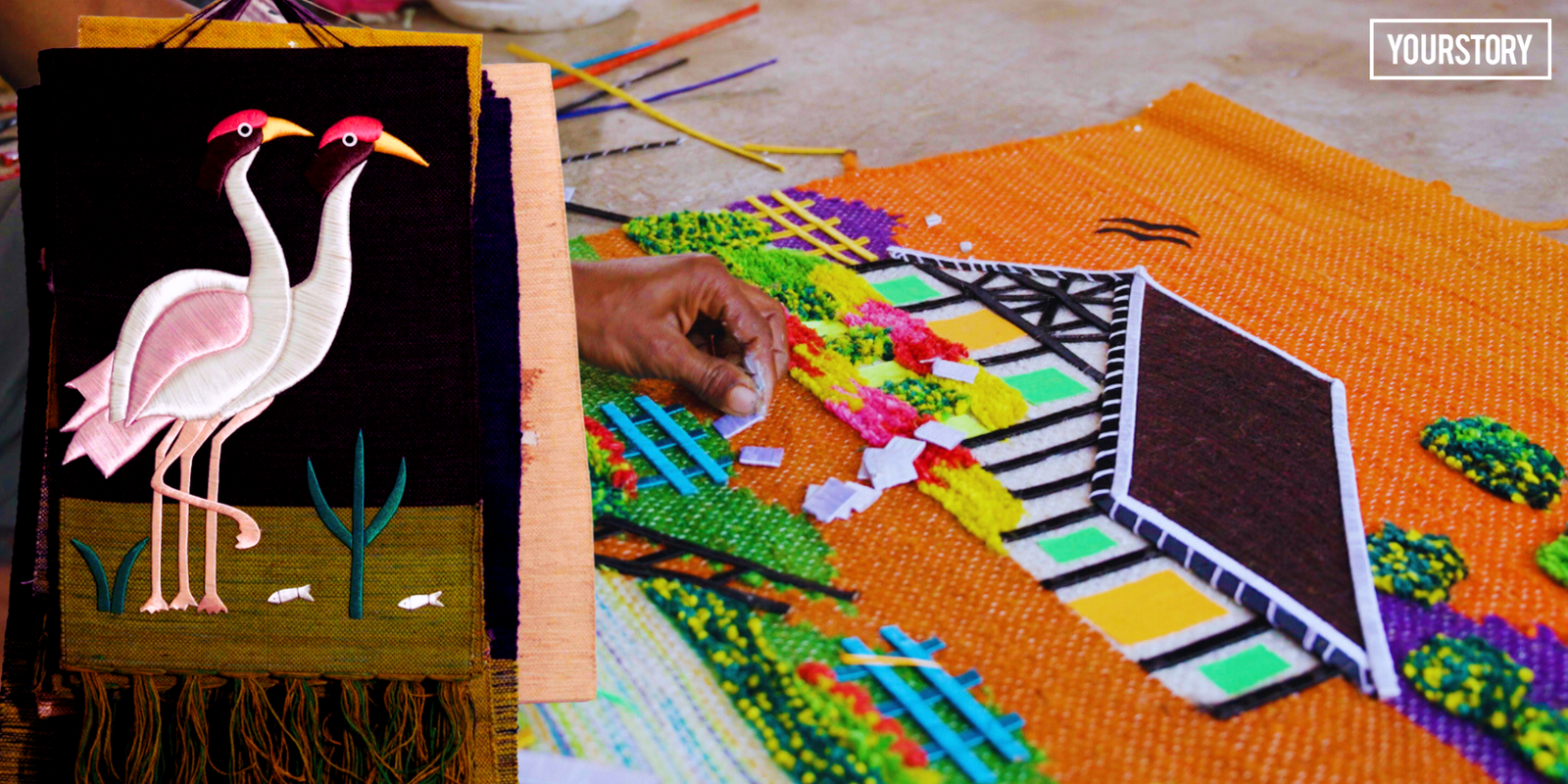
In Ghazipur, Uttar Pradesh, jute wall hangings are not just décor pieces. They hang in homes as framed backdrops, sit near prayer spaces, and travel as wedding gifts — carrying a rustic aesthetic that blends tradition with contemporary taste.Behind each finished piece lies a distributed production chain across weaving units, dyeing setups, and home-based finishing tables, particularly in and around Paharpur Kalan village.This craft cluster has gained structured visibility through the One District One Product (ODOP) framework, which supports district-identified products through credit access, training exposure, and exhibition platforms.A Craft That Grew Into a ClusterBabar Ali of Paharpur Kalan traces the origin of this ecosystem to his father, Mohammad Israil Ansari, who introduced the craft in the village and trained others until production expanded beyond a single household.Initially focused on thread-based items, the unit gradually shifted to wool and eventually to jute — responding to buyer demand and scalability. Early products moved through traders to markets in Varanasi and Delhi, while some orders reached international destinations such as Italy, Japan, and Nepal through intermediaries.As demand grew, production divided into specialised tasks: dyeing, weaving, stitching, and finishing handled by different artisans across households.Material, Process, and FinishRaw jute is sourced primarily from… Read MoreYourStory RSS Feed