






Budget 2026: From gaming to streaming, M&E sector urges government for...
As Union Finance Minister Nirmala Sitharaman prepares to present Budget 2026-27 next week, India’s media and entertainment (M&E) sector is sharpening its expectations pitch. For FY27, the sector’s broad asks from the government include placing gaming and esports at the centre of India’s creative economy, along with enabling policy changes around taxation, content creation, and digital distribution.After two Union Budgets that offered limited sector-specific relief, industry leaders say the upcoming Budget represents a moment to move from regulatory consolidation to growth enablement, especially for fast-scaling digital and creative businesses.Gaming leads the chargeIndia’s gaming and esports ecosystem, now one of the world’s largest by user base—India had 500 million active gamers in 2025, per a report by Redseer and BITKRAFT Ventures—argues that while regulatory clarity has improved in recent years, fiscal policy has yet to reflect gaming’s role as a “skill-based, IP-driven export opportunity” rather than a narrow consumption category.At the top of its wishlist is formal recognition of esports as a sport, a move industry leaders believe would unlock sponsorships, institutional funding, and fairer tax treatment of prize winnings.“If esports is recognised on par with traditional sports, prize money should be treated similarly from a taxation standpoint,” according to Akshat… Read MoreYourStory RSS Feed

Kunal Arya of Zelio E-Mobility on Scaling Affordable EVs, Localisation, and...

The most boring businesses in India that quietly make crores
When we think of business success in India, our imagination often jumps to flashy tech startups, glamorous consumer brands, or disruptive innovations. Yet, the real engine of consistent wealth in the Indian economy isn’t always exciting. Some of the most steady, recession-proof, and highly profitable ventures are those that might seem downright boring at first glance but quietly generate crores in revenue year after year. 1. Scrap Collection & RecyclingAt first thought, scrap collection doesn’t scream “fortune.” But India produces millions of tons of waste annually, including metal, plastic, and e-waste all of which have strong end-market demand from recycling plants and manufacturers. The margins in this sector can be surprisingly healthy, especially for operators who streamline collection and sorting. Why it makes money:Constant supply of waste from factories, construction sites, and householdsEssential service with minimal glamourHigh demand from domestic recyclers2. Cloud Kitchens (Without a Dining Space)The explosion of food delivery platforms like Swiggy and Zomato has enabled a new breed of kitchen: delivery-only food businesses. These operations skip the expensive dining area and front-of-house staff, cutting costs dramatically while still turning out substantial profits. Business snapshot:Lower setup costs than traditional restaurantsHigh potential for volume salesAttractive margins in niche or… Read MoreYourStory RSS Feed

The psychology behind why we buy the same thing again and...
Most purchasing decisions feel rational on the surface. We tell ourselves we chose a product because it was affordable, reliable, or convenient. But when people repeatedly buy the same brand of tea, toothpaste, shoes, or phone, the reasons often go deeper than logic. Habit, emotion, and subtle psychological rewards quietly shape what ends up in our shopping baskets.The comfort of familiarityAt the core of repeat buying is familiarity. The human brain is wired to conserve energy. Every new decision requires mental effort, and familiar choices reduce that load. When a product has worked once, choosing it again feels safe. There is no need to re-evaluate, compare, or take a risk.This is especially true in everyday purchases. The stakes feel low, but the repetition is high. Over time, familiarity turns into a default setting. The brand becomes less of a choice and more of an automatic response.Habit beats active choicePsychologists often describe buying behaviour as habit-driven rather than decision-driven. Once a routine is established, the brain shifts control from conscious thinking to automatic behaviour. This is why people often reach for the same item without actively noticing it.Habit loops follow a simple pattern: cue, routine, reward. The cue might be running… Read MoreYourStory RSS Feed
From a growth-mindset to ROI by design: How Indian startups are...
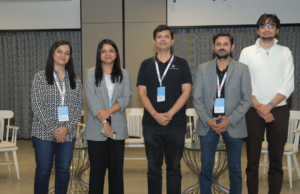
India’s startup ecosystem is entering a phase of recalibration. The era of growth-at-all-costs is fading, replaced by a sharper focus on discipline, defensibility, and outcomes. As capital becomes more selective and markets more demanding, startups are being pushed to prove not just how fast they can scale, but how intelligently they can grow—and sustain that growth.These themes took centre stage at a Snowflake panel discussion titled ‘Future-ready Startups: Data, Product Innovation & Capital Strategy for 2026’, where industry leaders explored what it will take for startups to stay competitive in the years ahead.The consensus was clear: the next generation of winners will be those that can turn raw data into insight, insight into decisive action, and action into long-term profitability.The panel featured Ayushi Garg, Principal, 3one4 Capital; Ritu Maheshwari, SVP - Finance, Deconstruct; Ramit Rajinder Bhard, CTO, IndiQube Spaces Ltd; and Sumeet Tandure, Senior SE Manager, Snowflake. The roundtable was moderated by Rishabh Mansur, Head - Content Categories, YourStory.The startup shifts for the new yearMaheshwari opened the discussion by highlighting the strategic shift in India’s startup ecosystem for 2026. She said strategic shifts in India's startup ecosystem emphasize capital efficiency, sustainable growth, and data-driven repeatability over unchecked expansion. Maheshwari, who… Read MoreYourStory RSS Feed

D2C Lifestyle Brand Salty Raises INR 30 Cr To Expand Product...
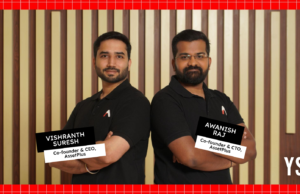
AssetPlus raises Rs 175 Cr led by Nexus Venture Partners to...
AssetPlus, a fully digital-assisted wealth management platform, on Monday said it raised Rs 175 crore in a funding round led by Nexus Venture Partners. The startup is also backed by Eight Roads Ventures and Rainmatter by Zerodha, with Bhupinder Singh continuing as an early supporter.AssetPlus plans to use the new capital to strengthen its technology infrastructure, expand its product suite, and advance initiatives supporting comprehensive wealth management. Mutual funds remain central to the platform, complemented by health and term insurance products, which allow distributors to provide integrated financial planning through a single system.Founded in 2016, AssetPlus equips mutual fund distributors (MFDs) with technology tools to deliver consistent, advisory-led support to Indian households.According to the company, the growth of self-directed investing has underlined challenges such as fragmented decisions, emotional biases, and inadequate long-term planning. AssetPlus expects advisory-led models, supported by robust technology, to play a larger role as retail participation in financial markets increases.More than 18,000 MFDs currently operate on the AssetPlus platform across India, which collectively manages over Rs 7,250 crore in assets under management, oversees a monthly SIP book of more than Rs 125 crore, and serves over 1.5 lakh investors. The platform aims to simplify their work… Read MoreYourStory RSS Feed

11:11 | Davos 2026; Trump’s Greenland tariff gambit; Silver’s rally; AI...
India’s EV paradox: Why adoption isn’t as simple as it looks
India’s EV revolution looks clean on the streets. It is far messier behind the scenes.Electric vehicles are being sold as the obvious answer to pollution, climate change, and rising fuel costs. Sales are rising fast, charging stations are spreading, and EVs now account for a growing share of two-wheelers and cars on Indian roads. But beneath this success story sits a quieter contradiction. While EVs reduce tailpipe emissions, the batteries that power them are creating a new environmental and economic challenge that India is not prepared for. This article unpacks the EV paradox in India and explains why adoption, at scale, is far more complex than it appears.India’s EV boom hides a growing problemIndia’s EV market is projected to reach 10 million annual vehicle sales by 2030, growing at a CAGR of 49% between 2022 and 2030. EVs can cut tailpipe emissions by 50 to 70% compared to petrol vehicles, making them a powerful climate solution.But by 2030, India is also expected to generate around 600,000 metric tonnes of lithium-ion battery waste every year. Today, the country has formal recycling capacity for only about 30,000 tonnes annually, and less than 5% of battery waste flows through regulated channels. The rest… Read MoreYourStory RSS Feed

How EON Space Labs is advancing India’s spacetech sovereignty push with...
Sanjay Kumar, Punit Badeka, and Manoj Kumar Gaddam share a deep-rooted obsession with precision. Their cumulative 17-year-long stint building ultra-precision optics for ophthalmic and eye-imaging systems at Hyderabad’s LV Prasad Eye Institute only helped sharpen it. So, when private participation in India’s space and defence sectors accelerated in the late 2020s, the trio identified a glaring capability gap: India largely imported high-end Electro-Optical (EO) and Infrared (IR) imaging payloads. “Timelines, costs, and strategic dependencies were outside India’s control. As of 2023, India only operated 24 active EO satellites, depending on foreign providers for nearly 80% of its high-resolution imaging data,” says Kumar. They founded EON Space Labs in December 2022 to build and qualify indigenous world-class imaging payloads for dual-use needs, spanning CubeSats, satellites, drones, UAVs, and ground-mounted optics. “High-resolution imaging is one of the hardest proving grounds for compact and miniaturised optics, and if a startup can produce a commercially viable space-grade imager indigenously, it can scale and use it for dual-use defence and commercial applications targeting the export markets,” Kumar tells YourStory. Engineering for orbit, and beyondEON currently employs 17 people, extending capacity through strategic partners and accredited infrastructure. Bengaluru-based HHV Advanced Technologies handles the startup’s optics manufacturing, while an NABL-accredited facility in… Read MoreYourStory RSS Feed