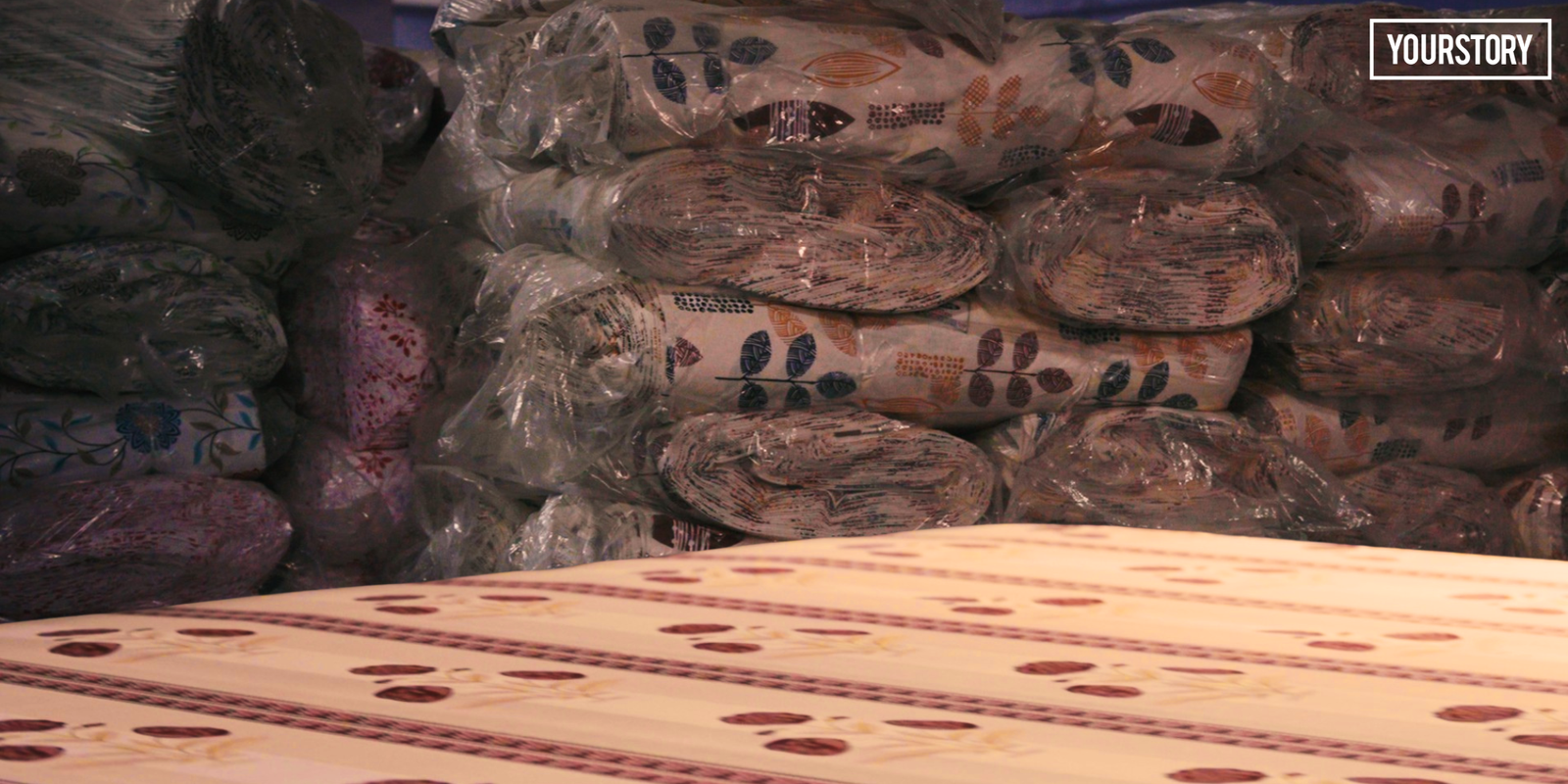
In Hapur, Uttar Pradesh, textiles are not just retail goods — they are a structured manufacturing ecosystem. Bed sheets, comforters, quilts, and bath linens move from factory floors to homes, hotels, and institutional buyers, sustaining a chain that links yarn suppliers, loom operators, printers, finishers, packers, and transporters.Within the district, Pilkhuwa has long been recognised as a textile centre. Over time, the cluster has shifted from being largely trade-oriented to strengthening its manufacturing base, giving units greater control over quality, timelines, and product development.Building a Manufacturing IdentityArjun Singhal, who runs Bharat Textile Mills at the Pilkhuwa textile centre, represents this transition. His unit manufactures bed sheets, comforters, quilts, bath sheets, and foam décor items — products that serve both retail households and bulk buyers.He draws a clear distinction between trading and manufacturing. Trading depends on external suppliers, while manufacturing allows control over finish, consistency, and delivery schedules.“When you manufacture, you control the quality promise,” he notes.The unit began with around 120 employees and later expanded to approximately 200, with additional indirect employment generated through logistics and packaging services.From Yarn to Finished ProductThe production cycle begins with yarn sourced from Gujarat. It is woven into grey cloth on looms before undergoing… Read MoreYourStory RSS Feed