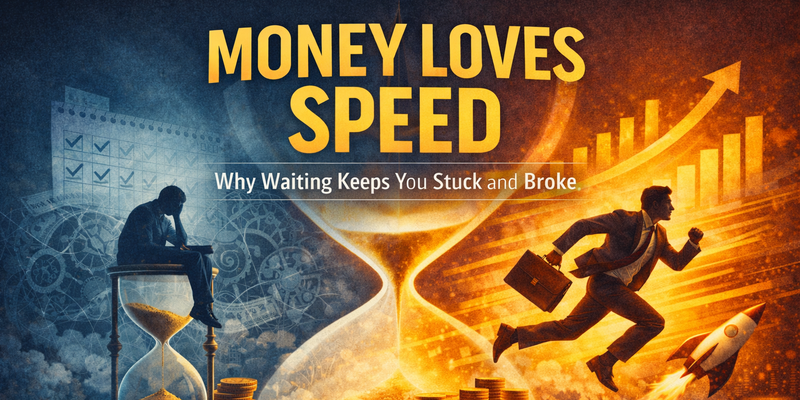
Money loves speed—but not reckless speed. Codie Sanchez’s line, “Decrease the time between having an idea and getting it done. Poverty loves waiting,” points to a pattern most people recognise but rarely name: delays are not neutral. They quietly raise the “cost” of action—through lost momentum, missed windows, and the slow erosion of confidence.In practice, this isn’t about becoming hyper-busy. It’s about shortening the gap between intent and execution, especially on the small, high-leverage actions that turn ideas into outcomes.What “money loves speed” really meansWhen people say money loves speed, they usually mean one thing: opportunities reward the doer, not the daydreamer. A business idea, a career plan, a savings goal, a side project none of these pays you for thinking about it. The reward shows up only when the idea moves into the real world: a call made, a product shipped, a proposal sent, a system built, a habit repeated.Speed here is not running faster. It is reducing friction. It is deciding faster, starting sooner, and learning quickly from small attempts rather than waiting for perfect certainty.Why waiting becomes expensiveWaiting feels safe because it looks like preparation. But often it is disguised avoidance—waiting for more clarity, more confidence, more… Read MoreYourStory RSS Feed