






India needs $22.7T investment to achieve net zero target by 2070:...
India will need investments totalling $22.7 trillion to reduce greenhouse gas emissions and achieve the net zero target by 2070, a Niti Aayog study said.On an annualised basis, this cumulative requirement translates into average flows of approximately $500 billion per year, compared with actual annual investment of around $135 billion in 2024, of which only $70–80 billion currently supports clean energy, said the Niti Aayog's study report on 'Scenarios Towards Viksit Bharat and Net Zero: An Overview'.Of the total, approximately $8 trillion must be front-loaded by 2050, including nearly $5 trillion in the power sector, given the capital-intensive nature of most low-carbon technologies.The Net Zero Scenario reflects an ambitious pathway aligned with India's commitment to achieve net zero GHG emissions by 2070.With coordinated domestic and external reforms, India could credibly mobilise around $16.2 trillion towards its net zero transition by 2070 through a structural expansion in the scale, depth and efficiency of available capital, the study said.Domestically, this entails deepening the corporate bond market, increasing the financialisation of household savings, and enabling institutional investors to invest in new areas, while safeguarding returns through diversified, high-quality corporate and green assets, the study said.Externally, scaling FDI (foreign direct investment) and FPI (foreign… Read MoreYourStory RSS Feed

Royal Enfield Owner Eicher Motors Shares Jump 6.5% to Record High...
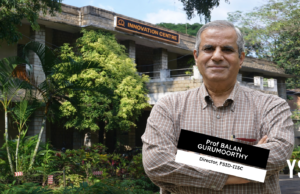
How IISc’s FSID is building a vibrant deeptech ecosystem in India
Deeptech startups in India are now coming into global prominence. The sector’s success largely owes itself to science & engineering talent, and the 117-year-old academic institute that has imbibed these elements to build an ecosystem that nurtures these kinds of founders.Within the Indian Institute of Science (IISc), the Foundation for Science Innovation and Development (FSID), which was formally incorporated in 2020, has been engaged with deeptech startups in the country, enlarging the scope of its activity each year. The core philosophy driving FSID aligns with that of IISc.“It is always about taking the know-how developed on the campus (IISc) to the outside world. The second part is that it should somehow be relevant to the immediate world around us,” says Prof Balan Gurumoorthy, Director - FSID, in an interview with YourStory.Given the depth and breadth of IISc in the varied disciplines of science and engineering, deeptech startups would easily fit into its groove. Gurumoothy highlights the path of a deeptech startup —science, technology, engineering, and finally, the product.“Our definition is very simple, you know, which is that anything where the offering is based on unique or new science. Then we say, that is our game where we would like to… Read MoreYourStory RSS Feed

Good Monk Raises Inr 33 Crore at INR 175 Crore Valuation...

Bengaluru Pune High Speed Rail Gets Green Signal From Govt
The idea of a high-speed rail corridor linking Bengaluru and Pune is gaining traction as central and state leaders push for its prioritisation. Although not part of the seven high-speed routes announced in the Union Budget 2026–27, discussions between senior officials — including Union Minister Pralhad Joshi and Railway Minister Ashwini Vaishnaw — have given the proposal a fresh boost in momentum. Strategic Connectivity Between Major Hubs The envisioned corridor aims to bridge two of India’s most important economic and technology hubs: Bengaluru, known as the country’s Silicon Valley, and Pune, a key centre for IT, manufacturing and education. Proponents argue that faster rail connectivity between these cities could transform travel, bolster business collaboration, and attract investment across both regions. Beyond the endpoints, the project is expected to benefit districts in north and central Karnataka, such as Belagavi, Hubballi-Dharwad, Haveri, Davanagere, Chitradurga and Tumakuru. Improved rail links could make it easier for residents to access job markets, educational institutions and commercial opportunities in both Bengaluru and Pune. Advocacy From State Leaders Karnataka’s political leadership has actively supported the proposal, emphasising that it deserves priority alongside the corridors already announced in the national budget. MB Patil, Karnataka’s Minister for Large and… Read MoreBusiness Archives - Trak.in - Indian Business of Tech, Mobile & Startups

Zappfresh Enters Frozen Veg Snacks Segment, Commits ₹10 Cr Investment

Apple’s 6th Store To Open In Hyderabad: Hiring Starts For Store...
Like a glowing apple rolling steadily across new ground, Apple’s India journey continues to gather momentum. Hyderabad Next on Apple’s Retail Map Apple appears poised to expand its physical retail footprint in India, with Hyderabad emerging as the likely next destination for a new Apple Store. While the company has not formally announced the launch, strong signals are already in place. Apple has begun hiring for three key retail roles—store leader, senior manager and manager—through its official website, with all positions based in Hyderabad. The recruitment drive has fuelled speculation that the company is preparing to open its seventh store in the country. Apple entered India’s brick-and-mortar retail space in 2023, opening two flagship stores in quick succession—Apple BKC in Mumbai and Apple Saket in New Delhi. The momentum continued in 2025 with three more outlets: Apple Koregaon Park in Pune, Apple Hebbal in Bengaluru, and Apple Noida in the Delhi-NCR region. With five stores currently operational, Apple is clearly accelerating its retail strategy. Only recently, Apple CEO Tim Cook confirmed that a sixth store—Apple’s second in Mumbai—is on the way, though without a specific timeline. If the Hyderabad store materialises as expected, it will mark the company’s seventh retail… Read MoreBusiness Archives - Trak.in - Indian Business of Tech, Mobile & Startups

Preventify Raises ₹2 Crore Pre-Seed Funding Led by PedalStart to Expand...

Rs 50,000 Penalty On Dubai Metro For Spitting, Smoking
Like a finely tuned orchestra racing beneath the desert sun, Dubai Metro runs on rhythm, rules and remarkable precision. Discipline Behind the Shine Dubai’s ultra-modern Metro is celebrated for its speed, cleanliness and efficiency, carrying millions of passengers every day. To preserve this seamless experience, the Roads and Transport Authority (RTA) enforces a detailed system of fines designed to ensure safety, discipline and smooth operations across stations and trains. These penalties range from Dh100 (Rs 2,494) for minor etiquette lapses to Dh2,000 (Rs 50,000 approx.) for serious safety violations. The rules cover everything from everyday behaviour—such as eating, drinking or entering the wrong cabin—to more severe offences like fare evasion, smoking, vandalism and misuse of emergency equipment. According to RTA guidelines, minor behavioural breaches usually attract lower fines, while safety-related violations incur heavier penalties. Authorities stress that these fines are not meant to punish, but to safeguard passengers, protect infrastructure and maintain a high-quality travel experience. Repeated or grave offences may also lead to further legal consequences. From Small Slips to Serious Offences Minor offences typically carry a Dh100 fine and include disruptive behaviour, sitting in reserved cabins, eating or drinking in prohibited areas, bringing pets (excluding guide dogs), entering… Read MoreBusiness Archives - Trak.in - Indian Business of Tech, Mobile & Startups