



90% Companies Say AI Has Done Nothing For Them In 3...
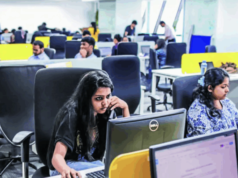
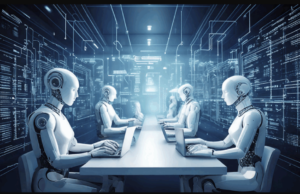
Despite the global surge in artificial intelligence adoption across industries, a new study by the National Bureau of Economic Research (NBER) reveals that AI’s real-world impact on employment and productivity has been surprisingly limited. According to the research, over 90 per cent of companies surveyed reported no change in employment or labour productivity from using AI over the past three years, challenging widespread expectations about the technology’s transformative power. The Study: What Companies Are Saying Researchers surveyed nearly 6,000 senior executives in major economies including the United States, the United Kingdom, Germany and Australia. The findings paint a picture of cautious, low-intensity AI use — with about two-thirds of executives reporting they use AI, but on average only about 1.5 hours per week. Around 25 per cent of firms said they don’t use AI at all in their operations. Despite significant investments in AI systems, very few companies have seen measurable effects on employment levels or productivity, measured as sales per employee. Over the three-year study period, over 90 per cent reported no employment change, while nearly 89 per cent said AI did not affect productivity. Current AI Usage Patterns AI use within these firms tends to be low and… Read MoreBusiness Archives - Trak.in - Indian Business of Tech, Mobile & Startups
Salaried Employees Can Get Rs 1 Lakh Tax Exemption With Meal...
Sometimes, relief comes not as a grand windfall, but as a modest meal made lighter on the wallet. A Bigger Bite of Tax Relief India’s draft Income Tax Rules, 2026 propose a significant hike in the tax-free value of employer-provided meals — from ₹50 per meal to ₹200. The change covers meal coupons, vouchers, and food cards such as those issued by Sodexo (now Pluxee) and Zaggle. Earlier, two meals a day worth ₹50 each meant an annual exemption of ₹26,400. Under the draft rules, the same structure at ₹200 per meal could raise the tax-exempt amount to ₹1,05,600 a year, if cleared by Parliament. Shubham Jain, Director at SVAS Business Advisors, explained that with two meals per working day, the math works as follows: ₹200 × 2 meals = ₹400 per day ₹400 × 22 working days = ₹8,800 per month ₹8,800 × 12 months = ₹1,05,600 per year “So, a tax-free meal benefit of up to Rs 1,05,600 per year is allowed under the proposed rules.” Gaurav Jain, Partner, Direct Tax, at Forvis Mazars in India, noted that the incremental exemption over the current ₹26,400 limit would be ₹79,200. For someone in the 30% tax bracket (plus 4%… Read MoreBusiness Archives - Trak.in - Indian Business of Tech, Mobile & Startups

Tata Secures OpenAI as Anchor Client for Stargate Data Centre Project
IBM Will Hire 3-Times More Freshers Despite AI & Automation
As machines learn to think faster, the question lingers—who will learn to lead them? Betting on Beginners in the Age of AI IBM plans to triple its entry-level hiring in the United States in 2026, challenging the growing belief that artificial intelligence will thin out junior job pipelines. The initiative, first reported by Bloomberg, was announced by IBM’s Chief Human Resources Officer Nickle LaMoreaux at Charter’s Leading with AI Summit. “And yes, it’s for all these jobs that we’re being told AI can do,” LaMoreaux said, signalling IBM’s stance that automation does not erase the need for early-career professionals. The announcement comes amid intensifying debate across the technology sector, where companies and investors argue that AI could erode entry-level roles in coding, data analysis, and routine support. Rather than scaling back, IBM is reshaping junior roles—shifting focus away from repetitive technical tasks that AI can execute efficiently and toward client engagement, collaboration, and problem-solving. LaMoreaux noted that job descriptions have been rewritten to reduce emphasis on automatable work and instead prioritise interpersonal and customer-facing skills. Redesign, Not Retreat IBM has not disclosed exact hiring numbers beyond the plan to triple recruitment, nor detailed the timeline of the expansion, as noted… Read MoreBusiness Archives - Trak.in - Indian Business of Tech, Mobile & Startups

Banks Earned Rs 4800 Crore In 12 Months By Imposing Minimum...
In the quiet arithmetic of banking, small shortfalls can swell into costly lessons. A Costly Slip Below Minimum Indian banks collected ₹4,818 crores in penalties during FY2024-25 from customers who failed to maintain the mandated minimum average balance (MAB) in savings and current accounts, according to a parliamentary report tabled in the Lok Sabha. The fourth report of the Committee on Petitions, chaired by BJP MP Chandra Prakash Joshi, flagged how minimum balance rules have evolved into a consistent revenue stream. “The penalties levied on non-maintenance of minimum balance are often disproportionately high, causing undue financial stress on account holders, particularly those from economically weaker sections,” the committee said. Savings account holders typically earn interest between 2.5% and 4% annually, with some banks offering 6–7%. However, the report noted that penalties for shortfalls can be 15 to 20 times the interest a customer might have earned by maintaining the required balance. For low-income earners with fluctuating deposits, the burden becomes particularly acute. Public sector banks collected ₹2,045.7 crores in FY2024-25, an 8% decline from the previous year. Private banks accounted for a larger ₹2,772.2 crores. Among them, HDFC Bank contributed nearly 40% of private bank collections, followed by Axis Bank… Read MoreBusiness Archives - Trak.in - Indian Business of Tech, Mobile & Startups

How This Trousers Brand Is Making Fit The Real Differentiator
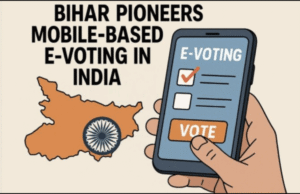
Bihar Becomes 1st State To Launch AI-Powered E-Voting For Local Elections
The India-AI Impact Summit 2026, held in New Delhi, has become a showcase for how states are adopting artificial intelligence to transform governance. Among the key developments, the State Election Commission of Bihar introduced a secure mobile-based AI-powered e-voting system, marking a significant step toward digital democracy in local elections. A Modern Solution to Voter Exclusion Bihar’s new e-voting system was demonstrated at the AI Impact Summit as a way to make voting accessible to citizens who often face barriers at traditional polling booths. Migrant workers, students living away from home, senior citizens, pregnant women, persons with disabilities and people with health challenges can now cast their votes using a smartphone. The idea behind this move is simple yet powerful: geographical or physical limitations should not prevent eligible voters from participating in the democratic process. With labour migration from Bihar being high, this innovation could increase urban turnout and broaden civic participation across constituencies. How the E-Voting System Works The e-voting process begins with a dedicated mobile application. Voters need to download the app, register by providing basic details including their EPIC (Electoral Photo Identity Card) number, and complete verification through OTP (one-time password) and live facial recognition. Unlike other… Read MoreBusiness Archives - Trak.in - Indian Business of Tech, Mobile & Startups
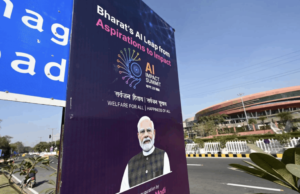
AI Mission 2.0: India To Have 58,000 GPUs, Available At Rs...
On February 17, 2026, at the India AI Impact Summit in New Delhi, Ashwini Vaishnaw announced that India will increase its AI computing capacity from 38,000 GPUs by adding 20,000 more under AI Mission 2.0. He stated that purchase orders for these GPUs would be issued within a week, with deployment expected over the next six months. Ashwini Vaishnaw Announces 20,000 More GPUs Under India’s AI Mission 2.0 at India AI Impact Summit 2026 The expansion is part of AI Mission 2.0, which places greater emphasis on research and development, innovation, wider AI adoption, and shared computing infrastructure. Emphasizing accessibility, he said, “It is a constant endeavor to provide high-quality resources to our startups, researchers, and students.” The announcement also aligns with the 2026 India–U.S. trade framework, which aims to significantly boost bilateral trade in technology products such as GPUs and data center equipment. Under this framework, India intends to purchase $500 billion worth of U.S. energy products, aircraft, technology goods, and critical materials over five years, while deepening joint technology collaboration. The AI expansion builds on the IndiaAI Mission approved in March 2024 with a budget of ₹10,371.92 crore (around $1.14 billion) spread across five years. Although the original… Read MoreBusiness Archives - Trak.in - Indian Business of Tech, Mobile & Startups

Meta Platforms to Shut Down Messenger.com in April 2026
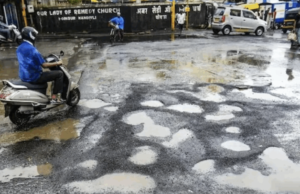
Delhi Allocates Rs 800 Crore To Make 241 Roads Pothole-Free
The Delhi government has recently approved a large-scale road redevelopment project as they aim to make the city’s roads pothole-free, even and long-lasting. Delhi Government Approved Upgrade Of 241 Roads More than 241 major roads across the city will be upgraded using advanced technology, with support from the Centre said the CM Rekha Gupta on Tuesday. They will be developing all roads under the ‘wall-to-wall carpeting’ model, this is to ensure full-width construction with uniform quality. This project seems to be a major step towards a safer and more organised capital, CM said further adding that nearly 400 km of roads across 45 Assembly constituencies will be covered. Prior to this, earlier repairs were often limited to potholes or central portions, leading to quick deterioration, the Chief Minister noted. Strengthening Entire Stretch Of Road Now, the entire stretches will be strengthened edge-to-edge, improving durability and lifespan, under this new approach. Besides this, a fully levelled and sealed surface will also reduce dust and air pollution caused by loose particles from damaged roads. They are targeting the completion of this project by year-end and will be executed in phases to minimise traffic disruption. The Public Works Department is planning to implement… Read MoreBusiness Archives - Trak.in - Indian Business of Tech, Mobile & Startups