


Delhi Govt Will Give Free LPG Cookin Gas Cylinder This Diwali...
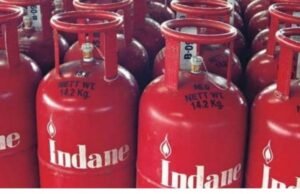
In a welfare initiative, the Delhi government has approved to provide economically weaker households in the city with a free LPG cooking gas cylinder on the occasions of Holi and Diwali. How Did This Happen? A massive good news for the residents of Delhi as the Delhi government has approved a welfare initiative under which it will provide free gas cylinders to the people of Delhi. They have taken this decision during a cabinet meeting on Tuesday and approved a budgetary allocation of Rs 300 crore for this scheme. According to them, this initiative fulfills a key electoral promise made by the BJP during the Delhi Assembly elections. It appears that the party’s manifesto had pledged one free LPG cylinder on Holi and Diwali, along with a Rs 500 subsidized cylinder for economically weaker households. Who Will Be Illegible For Getting This Benefit? The scheme will cover ration card holders from economically weaker sections starting this Holi, said the officials. They will be transferring the amount for one cylinder directly to the beneficiaries’ Aadhaar-linked bank accounts through the Direct Benefit Transfer (DBT) mechanism. This is to ensure transparency further allowing beneficiaries to purchase the cylinder from their regular distributor. The… Read MoreBusiness Archives - Trak.in - Indian Business of Tech, Mobile & Startups
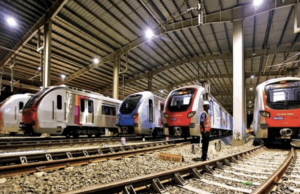
Mumbai Metro Line 9 Can Start In Late January (Dahisar To...
This Tuesday, the Metro Line 9 connecting Dahisar East to Mira Road, received the final nod of approval from the Commissioner of Metro Railway Safety (CMRS). Metro Line 9 Get Safety Clearance The construction of the first phase of the line, which will extend Line 7 from Dahisar East to Andheri East will have four stations in its 4.5 km stretch, ending at Kashigaon in Mira Road. These stations including Dahisar, Pandhurang Wadi, Miragaon, and Kashigaon are aimed to ease the congestion on the Dahisar Checknaka stretch and the Western Express Highway. Moving ahead, sources from the Mumbai Metropolitan Region Development Authority (MMRDA) said, “Staff are being deployed on the prospective line, and training is ongoing.” So far, an exact opening date is yet to be confirmed but they are expecting that the line may get inaugurated on Republic Day, by the end of January, or in early February. It appears that the Commissioner of Metro Rail Safety (CMRS) has approved the opening of Phase 1 of Mumbai Metro Line 9. First Metro Connecting People Living In Eastern Suburbs There are plans to open this line along with Phase 1 of Metro Line 2B on the same day, likely in… Read MoreBusiness Archives - Trak.in - Indian Business of Tech, Mobile & Startups
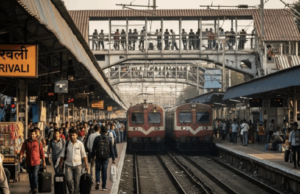
Borivali Station In Mumbai Gets Most Advanced Signalling System In Western...
Borivali station in Mumbai, one of the busiest suburban rail hubs, has received a smart signalling upgrade as part of Western Railway’s larger suburban network modernisation. The upgrade is linked to broader capacity expansion work, including the sixth rail line project between Kandivali and Borivali. Smart Signalling Upgrade Transforms Mumbai’s Borivali Station The station’s old relay-based signalling system, which relied on mechanical and electrical components and had been in use for decades, has been replaced with a modern Electronic Interlocking system. The specific platform installed is the Siemens Westrace MK-II Electronic Interlocking system. The new system acts as a digital control center that automatically manages and coordinates train routes, signals, track points, track circuits, and safety logic. It uses real-time monitoring and digital interfaces to improve accuracy, reliability, and responsiveness compared to the older relay-based system. The system electronically controls 381 operational train routes. It digitally manages 56 signal aspects. It coordinates 90 track points (switches) to ensure safe train movement. It monitors train positions through 123 track circuits. Seven running lines are integrated into a single unified control setup. Large digital display screens allow controllers to visualize train flow and overall system status. This installation is the largest and… Read MoreBusiness Archives - Trak.in - Indian Business of Tech, Mobile & Startups
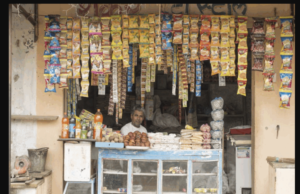
Rural India Spending 4% On Buying Tobacco, Just 2.5% On Education
Recent government consumption data presents a worrying reality: rural households are spending more on gutkha than on education. The Household Consumption and Expenditure Survey (HCES) reveals that rural families spend only 2.5% of their total consumption on education, while 4% is spent on tobacco products, mainly gutkha. Rural India Spends More on Gutkha Than Education, Survey Reveals These findings come at a time when tobacco prices are expected to rise from February 1, even as the government continues to expand public health services nationwide. Tobacco consumption has steadily increased over the last decade. From 2011-12 to 2023-24, per capita spending on tobacco rose by 58% in rural areas and by 77% in urban areas. Tobacco now makes up about 1.5% of monthly per capita expenditure in rural India and 1% in urban India. Although these spending shares may seem small, the number of tobacco users shows widespread and growing consumption. In rural India, households consuming tobacco increased from 9.9 crore (59.3% of all rural households) to 13.3 crore (68.6%), a 33% rise in just over a decade. Urban India has seen an even faster increase, with tobacco-using households growing by 59%, from 2.8 crore (34.9%) to 4.7 crore (45.6%). Tobacco… Read MoreBusiness Archives - Trak.in - Indian Business of Tech, Mobile & Startups

Inspired By Australia, Andhra Pradesh Planning A Ban On Social Media...
The Andhra Pradesh government is exploring a major policy shift targeting social media use among children under 16. Inspired by recent proposals in Australia aimed at protecting minors, the draft plan seeks to restrict access to online platforms for younger users through age verification mechanisms and parental consent requirements. The initiative represents a growing focus on child safety in digital spaces. Why the Proposal Is Emerging Policymakers in Andhra Pradesh point to rising concerns about the impact of social media on children’s mental health, academic performance, sleep patterns, and exposure to harmful content. Social media platforms, with features designed to maximise engagement, have been linked with anxiety, cyberbullying, and distraction among younger users. Similar debates in countries like Australia and across Europe frame youth social media use as a public-health issue rather than solely a personal choice. Key Elements of the Draft Policy The Andhra Pradesh draft proposes several significant measures: Age Verification: Users under 16 would need robust proof of age to access social media platforms. Parental Consent: Minors would be permitted to use popular apps only with verifiable parental approval. Feature Restrictions: Elements often cited as addictive — such as unlimited scrolling, autoplay videos, and certain app notifications… Read MoreBusiness Archives - Trak.in - Indian Business of Tech, Mobile & Startups

Govt Asks Auto Companies To Test Mileage With AC On
India’s automotive and transport policymakers are pushing for a significant revision in how fuel-efficiency tests are conducted. The government has proposed that tests by the Automotive Research Association of India (ARAI) include the impact of air-conditioner usage, especially in hot-weather conditions where AC load substantially affects fuel consumption. This move is intended to produce test results that more accurately reflect real-world driving scenarios for Indian consumers. Why AC Use Matters for Fuel Efficiency Fuel-efficiency ratings play a crucial role in shaping buyer decisions, regulatory norms, and environmental policies. Currently, vehicles undergo standardized laboratory tests without considering auxiliary loads such as the air conditioner, which many drivers use routinely due to India’s warm climate. Since an AC compressor places additional load on the engine, fuel economy typically drops when the system is in use. By factoring AC usage into test cycles, ratings could better approximate the on-road mileage that consumers experience. Current Testing Regime and Its Limitations ARAI currently conducts fuel-efficiency tests under established protocols that simulate standardized driving conditions. While these tests are internationally recognised and facilitate comparisons across models, they do not include elements such as AC load, variable traffic patterns, and environmental factors like temperature and humidity. Critics… Read MoreBusiness Archives - Trak.in - Indian Business of Tech, Mobile & Startups
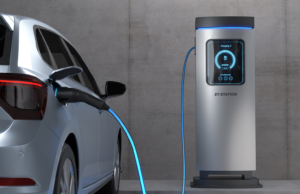
Trends that will rev up India’s EV landscape in 2026
While India's public EV charging network has grown rapidly, the actual number of reliably functional chargers is much lower than the total installed count. Over the last three years, the number of public chargers has grown more than fivefold, crossing the 30,000-mark nationwide. Cities like Delhi, Bangalore, and Chennai are installing new stations every week. And yet, utilisation remains painfully low. According to industry reports, less than 10% of chargers are being used regularly. The year 2026, thus, becomes the critical year to close this gap and build an ecosystem that works as smoothly in practice as it does on paper.Why the outlook remains strongSupported by subsidies, increased awareness, and new product launches, the EV sector has grown rapidly since FY2022. Factors like improved product choices, better charging infrastructure, more financing options, and lower battery prices are set to drive further expansion. The government is encouraging EV development through a multi-faceted approach. The PM e-Drive scheme includes investments in electrifying mass transport, building charging and testing facilities, and demand incentives for certain automotive segments. This has boosted investor confidence and momentum in the sector. Trends that will define the EV ecosystem in 2026Smart charging goes mainstream: EVs often charge in clusters- at… Read MoreYourStory RSS Feed

How India Is Wiring Its AI Stack For Bharat-Scale Deployment

2026 Outlook: AI, robotics, biotech, unicorns and the road ahead
At the start of 2026, Prime Venture Partners did what venture capitalists are both famous and infamous for - they looked into the future.“This is one of those episodes where the year-end episode next year is probably going to debunk almost everything we say,” Sanjay Swamy said candidly. “But let’s use our wildest imagination, a little bit of rationale and logic for entrepreneurs listening to the show.”That seesaw between imagination and humility ran through the entire conversation. And in many ways, it reflects where startup building itself stands today in 2026.Betting early in biotechVenture capital has always been about taking bets others can’t yet see. As Brij Bhushan put it plainly, “The VC world is about taking bets that others can’t see. And if you’re wrong, so be it.” What’s changing is where those bets are being placed.Amit Somani pointed to sectors that traditional VC models once avoided. “We’ve taken a bet in biotech - something we wouldn’t have normally done earlier,” he said. These are businesses with long gestation periods, sometimes with no revenue visibility for years. “Revenue for the next three years is zero. And yet it could be very big at some point.”Bhushan believes biotech in India… Read MoreYourStory RSS Feed

Indian VCs call for policies to encourage deeper pools of domestic...
India—the third-largest startup ecosystem—stands on the shoulders of venture capital (VC) firms that make bold investments and back passionate founders to ring in the next startup success story. While the country has been reeling from a funding winter, which lasted from 2023 to 2024, the VC ecosystem has corrected its course and is in a phase of disciplined maturity. Last year, Indian startups raised $11 billion—the lowest since 2020—with VCs writing fewer but larger checks, signalling a cautious and selective approach. In 2025, many VCs also raised new funds, albeit calling for greater participation from domestic institutional investors. “India has strong founder talent and operating depth, but long-term domestic pools like insurance and pension capital remain underrepresented at later stages. Enabling this participation through calibrated frameworks would strengthen capital continuity and reduce over-reliance on any single source of funding,” noted Navin Honagudi, Managing Partner at Elev8 Venture Partners.Echoing a similar sentiment, Kunal Khattar, Founder at mobility-focused fund, AdvantEdge, noted that policies should be rolled out to reduce reliance on foreign VCs, and that the government should create stronger incentives for insurance and pension funds to invest in SEBI-registered Alternative Investment Funds (AIFs). Firms are also looking for greater predictability and longevity for tax… Read MoreYourStory RSS Feed