






Why home-based businesses are quietly rising across India
In a narrow lane of Barabanki, a woman packs homemade pickles before sunrise. In a second-floor apartment in Indore, a graphic designer starts work while her children get ready for school. In a small town in Assam, a young man runs an online mobile repair service from his bedroom, coordinating doorstep visits through WhatsApp. None of them has a signboard. None of them runs ads. Yet, together, they represent one of the fastest-growing business movements in India today.Home-based businesses are no longer side hustles or temporary arrangements. They are becoming permanent, intentional choices. Across metros, tier-2 cities, and rural pockets, Indians are quietly building sustainable livelihoods from their homes, using skills they already have, minimal capital, and networks rooted in trust rather than visibility.This shift isn’t driven by trends alone. It is shaped by rising urban costs, changing work aspirations, improved digital access, and a deeper desire for autonomy. In a country where entrepreneurship was once tied to shops, offices, and factories, the definition of a “business” is being rewritten, room by room, kitchen by kitchen, and screen by screen.The silent rise of home-based businesses in India1. Rising costs are pushing entrepreneurs indoorsRunning a physical storefront has become expensive, and… Read MoreYourStory RSS Feed

90% of Success Comes Down to One Skill: Staying Undistracted
Success is often explained as talent, intelligence, or luck. But if you look closely at people who consistently perform well across fields, a quieter truth emerges: most of their advantage comes from the ability to stay focused. In a world designed to fragment attention, not getting distracted is no longer a soft skill. It is the core skill.Distraction does not usually arrive as chaos. It arrives politely. A notification. A quick scroll. One harmless check. None of these feels like failure in isolation, yet together they dissolve momentum. Focus is not broken in dramatic moments. It erodes in small ones.The real cost of distractionEvery time attention shifts, the brain pays a switching cost. It takes time and energy to return to the original task. Studies on cognitive performance show that frequent interruptions reduce not just speed but quality of thinking. Complex work needs continuity. Insight needs stillness.Most people underestimate this cost because distraction feels productive. Messages are answered, tabs are opened, information is consumed. Activity increases, but progress does not. You remain busy, yet nothing meaningful moves forward.The people who succeed early understand something simple: protecting attention is protecting results.Focus beats motivationMotivation is unreliable. It fluctuates with mood, energy, and… Read MoreYourStory RSS Feed

Zomato Leases 2.7 Lakh Sq Ft Office Space at Intellion Park,...

Arthum Raises INR 10 Crore Seed Investment led by Caret^Capital to...

Startup news and updates: daily roundup (January 21, 2026)
From deeptech-focused VC firm Speciale Invest promoting Vishnu Rajeev as its investment partner to Mumbai-based ClimaCrew driving seaweed cultivation along the western coast of India, YourStory brings today’s headlines with the latest developments across sectors.Features stories How this deeptech startup is driving seaweed cultivation along the western coast of India Mumbai-headquartered ClimaCrew is ramping up cultivation of seaweed, considered a powerhouse of nutrients, by engaging with the coastal communities of Gujarat and Maharashtra and end-user industries. Its AI-driven platform analyses satellite data to identify suitable spots for seaweed cultivation.Founded by Devleena Bhattacharjee, Susanta Kundu, and Rahul Mehta, the startup has a seaweed processing plant in Chiplun, Maharashtra. “Our primary goal is to be the one-stop shop for global organisations that are using seaweed in any of their products,” says Bhattacharjee. Read here. Founded in 2015 in Bengaluru by IIT graduates Prashant Gupta and Aditya Agarwal, who previously worked at global financial institutions and consulting firms.Wealthy is fuelling the next phase of growth for India’s mutual fund distributors through AITech platform for independent financial advisors in India, Wealthy, was founded in 2015 by Prashant Gupta and Aditya Agarwal to empower advisors with AI-driven tools for compliance, portfolio analysis, and client management. Based out of Bengaluru, Wealthy… Read MoreYourStory RSS Feed
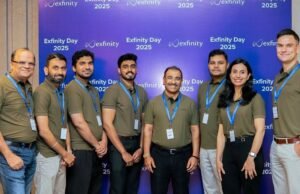
Exfinity Venture Partners makes full capital return for Fund II from...
Exfinity Venture Partners, a deeptech-focused venture capital firm, on Wednesday said it has achieved key liquidity milestones, enabling a full capital return for its Fund II, launched in 2016. The fund completed three strategic exits in the past 12 months, including an exit from Kinara.ai, when it was acquired by NXP Semiconductors, marking one of India’s significant deeptech M&A transactions. Following this, the company also exited Locus when Ingka Group, the holding company of IKEA, acquired it. The acquisition is expected to enhance Ingka Group‘s last-mile logistics and delivery optimisation. Exfinity also exited AI Palette, a portfolio company from the firm’s 2020 vintage fund, after GlobalData acquired it. According to Exfinity, a defining contributor to Fund II’s performance has been its stake in adtech startup Pixis. The fund had previously executed a partial exit, delivering 60X MOIC (Multiple on Invested Capital), and it continues to hold a significant ownership stake in the firm. MOIC is a key financial metric that shows how much total value an investment generates relative to the initial money put in it. A 60X MOIC means the firm earned $60 for every $1 invested in the company. Also Read3one4 completes partial exit from Dhan’s parent company“What… Read MoreYourStory RSS Feed

Kitchenware startup Cumin Co. raises $5M in pre-Series A round
Kitchenware startup Cumin Co. on Wednesday said it raised $5 million in a pre-Series A funding round led by Fireside Ventures. Existing investors Huddle Ventures and Alteria Capital also participated, along with a group of angel investors, including Atrium Angels, Mokobara Founder Navin Parwal, Tracxn Founder Abhishek Goyal, Zomato Co-founder Pankaj Chaddah, and Unacademy Founder Roman Saini.The funding comes less than a year after the startup's launch. During this period, it recorded a tenfold increase in revenue, suggesting an early product-market fit in a segment historically dominated by mass-market brands and price-led competition, Cumin Co. said in a statement.It plans to use the capital to expand its research-led product portfolio across cookware and kitchen essentials and strengthen its supply chain and product development capabilities as it scales.Also ReadKitchenware startup Cumin Co raises $1.5M in funding round led by Fireside VenturesFounded by ISB alumni Niharika Joshi and Udit Lekhi, Cumin Co.'s cookware is built around Enviromax, a proprietary material developed for Indian cooking conditions. It has received three patents and has five more pending, covering areas such as material composition, surface coatings, and product design.“Consumers today are asking sharper questions about materials, coatings, and what comes into contact with their food… Read MoreYourStory RSS Feed
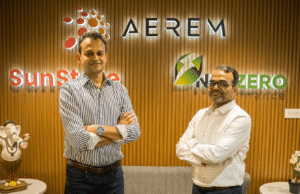
Aerem Raises $15 Mn To Offer Solar Financing Solutions

First Moon Hotel Planned by Nvidia and Y Combinator–Backed Startup GRU
What once lived firmly in the realm of science fiction is getting a serious commercial push: a hotel on the Moon. California-based space tech startup Galactic Resource Utilization Space (GRU Space), backed by Y Combinator and part of Nvidia’s accelerator program, has unveiled bold plans to build the first hotel on the lunar surface, targeting an initial opening by 2032. A Lunar Leap in Space TourismFounded in 2025 by entrepreneur Skyler Chan, GRU Space is positioning itself at the forefront of off-world hospitality and commercial lunar infrastructure. The startup’s mission is ambitious: to construct a lunar hotel that can host multi-day stays for space tourists, complete with life-support systems and panoramic views of both the Moon and Earth. The hotel is planned as an inflatable habitat module initially built on Earth and transported to the lunar surface via a heavy-lift lander. Designed to support up to four guests at a time, this first phase would operate for about a decade and serve as a stepping stone toward larger, more permanent lunar habitation. Roadmap to the MoonGRU Space’s development plan unfolds in several stages:2029: First technology demonstration to validate inflatable habitat deployment and other key systems.2031: Deployment of larger payloads and… Read MoreYourStory RSS Feed

360 ONE Asset raises Rs 1,000 Cr to back defence and...
Investment firm 360 One Asset on Tuesday raised Rs 1,000 crore in a multi-stage fund to back defence and space strategy companies in India. The fund will look to provide a range of capital support from venture capital to private equity to growth-stage capital, among others. 360 One aims to back 15 to 20 companies working in defence, space, aerospace, and allied strategic technologies, with this fund. The fund announcement comes at a time when there is rising opportunities in India’s defence and space-tech ecosystem with the FY25 defence budget touching Rs 6.22 lakh crore and defence export growth growing at 84% CAGR between FY21 and FY25, the firm said.India has also seen setting up of over 250 private space entities, the firm pointed out. Also ReadAavishkaar Group partners with Jamwant Ventures to launch Rs 500 Cr fund focused on defence and deeptechAccording to the company, it has already closed four investments under this fund to-date. According to a report by The Economic Times report noted that these investments are in the space of defence electronics, space analytics, electronic warfare, and satellite-based ISR. The report also noted that the fund will have an allocation mix of about 20% for venture… Read MoreYourStory RSS Feed