





Money Loves Speed: Why Waiting Keeps You Stuck and Broke
Money loves speed—but not reckless speed. Codie Sanchez’s line, “Decrease the time between having an idea and getting it done. Poverty loves waiting,” points to a pattern most people recognise but rarely name: delays are not neutral. They quietly raise the “cost” of action—through lost momentum, missed windows, and the slow erosion of confidence.In practice, this isn’t about becoming hyper-busy. It’s about shortening the gap between intent and execution, especially on the small, high-leverage actions that turn ideas into outcomes.What “money loves speed” really meansWhen people say money loves speed, they usually mean one thing: opportunities reward the doer, not the daydreamer. A business idea, a career plan, a savings goal, a side project none of these pays you for thinking about it. The reward shows up only when the idea moves into the real world: a call made, a product shipped, a proposal sent, a system built, a habit repeated.Speed here is not running faster. It is reducing friction. It is deciding faster, starting sooner, and learning quickly from small attempts rather than waiting for perfect certainty.Why waiting becomes expensiveWaiting feels safe because it looks like preparation. But often it is disguised avoidance—waiting for more clarity, more confidence, more… Read MoreYourStory RSS Feed
The power of starting right: Plato’s lesson for modern success
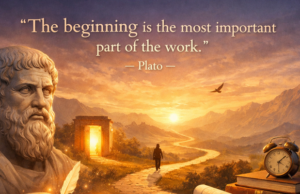
In a world driven by speed, efficiency, and constant deadlines, the idea of slowing down to focus on beginnings can feel counterintuitive. Yet more than two thousand years ago, the philosopher Plato captured a truth that remains just as relevant today: “The beginning is the most important part of the work.” This simple statement reflects a profound understanding of human behaviour, creativity, productivity—and continues to guide thinkers, leaders, and creators across industries.Plato’s insight speaks to a universal principle: the foundation you set at the start of any endeavor largely determines its direction and outcome. Whether building a business, writing a book, launching a project, or making a personal change, the opening steps are where intentions are clarified, structures are formed, and momentum is created. Without a strong beginning, even the most ambitious ideas can falter.In practical terms, beginnings shape our mindset. Research consistently shows that early decisions influence long-term success. For example, setting clear goals at the outset increases the likelihood of achieving them, while establishing organized systems from the start helps prevent chaos later on. When we rush into action without reflection, we often find ourselves backtracking, correcting avoidable mistakes, or losing motivation altogether. Plato’s wisdom reminds us that… Read MoreYourStory RSS Feed

Nike’s Converse Announces Major Job Cuts After 30% Revenue Decline in...

Target to Cut 500 Jobs Under CEO Michael Fiddelke’s Operational Restructuring...

Top Crypto Insurance Providers in the US: Secure Your Crypto, Reduce...

Startup news and updates: Daily roundup (February 11, 2026)
From AI-led GCC expansion to manufacturing tech, sustainable waste startups, and fresh funding across fintech, robotics, homeware, and apparel, YourStory brings you the latest from India’s tech and enterprise world.Featured newsIndia’s startup wave in manufacturing is reshaping demand for digital design tools: DassaultIndia’s push toward becoming a manufacturing-driven economy is increasing demand for digital product design and simulation tools, according to executives at Dassault Systèmes. The company said Indian manufacturers are accelerating technology adoption post-pandemic, investing more in research and shortening product development timelines.Alongside this trend, India is witnessing a rise in deeptech hardware startups focused on sectors such as electric vehicles, medical devices, drones, and automation. Many of these ventures are emerging from smaller cities and solving industry-specific problems. Dassault said it supports startups through software access, mentorship, and ecosystem partnerships rather than direct investments, with artificial intelligence expected to further accelerate design innovation. Read more.GCCs in India embrace AI to drive innovation: StudyA report by NTT Data and The Mainstream says over 70% of Global Capability Centres (GCCs) in India are investing in AI and GenAI, with 35% ranking GenAI as their top technology priority. Cloud and cybersecurity follow at 15%. India hosts around 1,900 GCCs employing two… Read MoreYourStory RSS Feed

How a personal health crisis sparked a scalable protein venture from...
India’s packaged food industry has long been dominated by sweet protein bars, cereal snacks, and imported health supplements. But as awareness around nutrition grows, a new wave of entrepreneurs is experimenting with formats that are both functional and rooted in local tastes. In Assam, where meat consumption is culturally embedded, the idea of a savory protein bar, one that carries the umami of chicken rather than the sugar of oats, is starting to find its place.IndiMeat, founded by Sayanika Deka, is one of those ventures. What began as a personal search for protein‑rich diets has grown into ready‑to‑eat chicken bars and nutraceutical powders, supported by Assam’s startup ecosystem and driven by a vision to make protein convenient, affordable, and culturally resonant.Watch nowA personal triggerSayanika’s journey into entrepreneurship began at home. When her father was diagnosed with dementia, doctors prescribed a protein‑rich diet. That moment made her realize how little was available in the market that was both protein‑dense and culturally familiar. “That is where I realised the importance of protein,” she recalls. From that point, she committed herself to developing products that could meet nutritional needs without compromising on taste.She sought specialized training and worked closely with institutions such as… Read MoreYourStory RSS Feed
Sultanpur’s moonj craft: from seasonal grass to sustained livelihoods
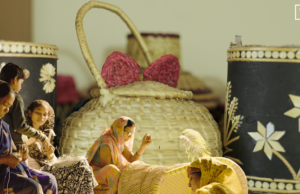
In Sultanpur, moonj craft transforms seasonal grass into everyday utility products. Baskets, dalias, storage containers, and decorative items made from moonj are widely used in homes, while also serving as gifting and lifestyle products.Behind these woven forms lies a structured livelihood chain. The process begins with the seasonal cutting of moonj grass, which is carefully dried and stored for year-round use. Proper handling is essential—poorly dried grass can fray during weaving and weaken the final product.Before weaving begins, the grass is processed into thin strips known locally as balla. These strips are dried again and then boiled in dye with salt to ensure even colour setting. Once prepared, artisans weave over a base, building the structure row by row and tightening the weave for strength and durability.Quality is reflected in even colour tones, firm weaving, clean edges, and a shape that holds with daily use.A women-led cluster modelRinka Singh, based in Rahil Para village, coordinates a women-led production network across the district. She oversees design planning, group-based production, quality checks, packaging, and dispatch. Today, nearly 525 women are connected to the craft, many working from home or in shared community spaces.Strengthened through ODOP supportWith recognition under the One District One… Read MoreYourStory RSS Feed