



TVS sees record monthly sales as overall EV sales rise in...
TVS Motor Company’s EV sales are off to a solid start this year as it posted its highest ever monthly sales of its electric two-wheelers in January. The company sold 31,731 units this month, commanding a 28.8% market share. The legacy automaker also sold the most number of EVs in 2025, which stood at 2,99,195 units. Meanwhile, peer Bajaj Auto sold 22,921 units, taking 20.7% market share in January. Sequentially, the company saw its sales increase 21% from 18,939 units in December, according to Vahan data. Tarun Mehta-led Ather Energy, which is slated to post its third-quarter results today, sold 19,760 units last month, commanding a 17.9% market share. The firm maintained its position as the third largest E2W manufacturer in India—a position it had gained after rival Bhavish Aggarwal-led Ola Electric saw plunging EV sales last year. Also ReadOla Electric to lay off 5% of its workforceOla Electric’s decline in sales has helped Hero MotoCorp to become the fourth-largest E2W maker in India. The firm sold 11,914 units in January, capturing a 10.8% of the market share, data showed. Ola Electric saw its sales decline sequentially. The company managed to sell only 6,747 units in January, capturing a mere 6.1% of the total EV… Read MoreYourStory RSS Feed

Govt, RBI In Talks With Ant International To Link Alipay+ With...

Meesho’s Shares Hit Lower Circuit For Second Consecutive Session After Q3...

Defence startups read between Budget 2026’s lines
India is no longer experimenting with defence technology—it is preparing to industrialise it.That is the clearest signal from Finance Minister Nirmala Sitharaman's Union Budget for 2026, even though defence startups were not explicitly name-checked in the announcement. For a small but growing cohort of companies building sensors, electronics, propulsion systems and space-linked intelligence tools, the message arrives not in what was said, but in the architecture beneath it.The Budget's emphasis on domestic manufacturing, critical minerals, electronics and semiconductor supply chains—alongside a sharp rise in capital expenditure for defence and national security technology—reflects a policy shift from episodic procurement toward long-horizon capability building.That shift arrives as India's defence-tech ecosystem enters a more selective phase. The sector has attracted $711 million in cumulative equity funding since inception, according to industry data. To put that in perspective, Israel's defence-tech sector, operating in an economy one-tenth the size of India's, draws nearly double that amount annually. More telling, Indian capital is increasingly concentrated in a handful of platform-oriented companies rather than spread thinly across speculative ventures, a sign of maturation but also of a narrow path to scale.From allocation to executionFor companies like EON Space Labs, which designs electro-optical and infrared imaging payloads—specialised cameras… Read MoreYourStory RSS Feed
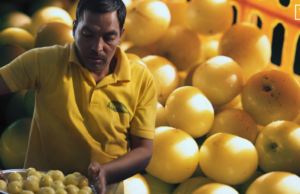
Inside Pratapgarh’s Amla Economy, From Orchard to Market
In Pratapgarh, Uttar Pradesh, amla is more than a seasonal fruit. It appears in home kitchens as candy and juice, in festive gift boxes, and in traditional Ayurvedic preparations. From orchards to processing units and markets, the small green berry supports farmers, processors, packers, and traders across the district.Recognising this strong livelihood linkage, food processing based on amla has been identified as Pratapgarh’s district product under the One District One Product (ODOP)initiative. Value addition has helped transform a short harvest season into year-round economic activity.At the centre of this ecosystem is Chandraprakash Shukla, an ODOP beneficiary and Secretary of Pushpanjali Gramodyog Seva Samiti, a locally rooted organisation engaged in amla processing. After completing his graduation, Shukla chose entrepreneurship over salaried employment, driven by the belief that local crops could generate local livelihoods.While amla was abundant in Pratapgarh, organised processing and structured market access were limited. Shukla saw an opportunity to bridge this gap by creating products that were easier to consume while retaining the fruit’s nutritional value. Drawing inspiration from Ayurvedic knowledge, his team focused on developing amla-based products that balanced health with taste.The unit began by experimenting with low-sugar amla candy and gradually introduced jaggery-based variants to suit changing consumer preferences. Continuous feedback from exhibitions and fairs helped refine flavours, textures, and… Read MoreYourStory RSS Feed
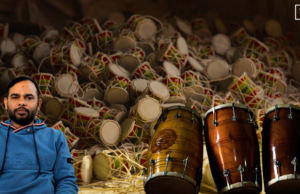
How Amroha’s Dholak Became Uttar Pradesh’s Signature Sound
In Amroha, Uttar Pradesh, the dholak is more than a musical instrument. It is a working product, one that moves seamlessly through homes, temples, wedding processions, neighbourhood gatherings, and festival grounds across India. In doing so, it quietly sustains an entire local craft economy.The story of Amroha’s dholak begins with wood. For generations, artisans have favoured mango wood for the drum’s frame shaped into a hollow body that is lightweight, well-balanced, and strong enough to withstand tension. Older craftsmen still recall a time before electricity and machines, when work unfolded in orchards and modest sheds, using only hand tools. Small teams would often spend an entire day shaping just a single wooden shell.While workshops today may have access to basic machinery, the handmade nature of the dholak remains intact. Rajeev Kumar Prajapati, who runs Ram Musical Handicraft and is associated with local craft bodies, explains that machines may assist certain stages, but the instrument still relies overwhelmingly on skilled hands. By his estimate, nearly 90–95 per cent of the process continues to be manual.Production moves in deliberate stages. Logs are cut into smaller sections, stripped of bark, shaped on a rotating setup, hollowed from within, and then painted. What follows is… Read MoreYourStory RSS Feed