




At 17, Guru Charann Tej Nambi Is Thinking Global with His...

From Founder Led to System Led: How the MSME India Network...

Oracle Plans Massive Layoffs: Up to 30,000 Jobs at Risk Amid...
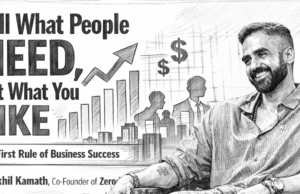
Nikhil Kamath’s First Rule of Business Every Founder Must Learn
First Rule of Business: Sell What People Need, Not What You Like— Nikhil Kamath, Co-Founder of ZerodhaIn the world of entrepreneurship, great ideas are abundant but what separates successful ventures from the rest isn’t passion alone, it’s product–market fit. This truth was encapsulated in a simple yet powerful statement attributed to Zerodha co-founder Nikhil Kamath: “First rule of business: Sell what people need, not what you like.” Understanding the PhilosophyAt its core, Kamath’s observation challenges founders to look beyond personal preferences and biases. Many entrepreneurs fall in love with their product or vision — whether it solves an actual problem or not. But customers, the ultimate arbiters of value reward solutions that address genuine needs. As one interpretation of Kamath’s quote puts it: the market doesn’t care what you like; it pays for what it needs. This isn’t merely philosophical. In practice, aligning offerings with customer needs drives real adoption, revenue growth, and sustainable business models.How Zerodha Lived This RuleZerodha’s journey itself is a case study in this principle. When Kamath and his brother Nithin Kamath launched the company in 2010, India’s brokerage landscape was dominated by high commissions and complex trading processes. Ordinary retail investors struggled with accessibility and… Read MoreYourStory RSS Feed
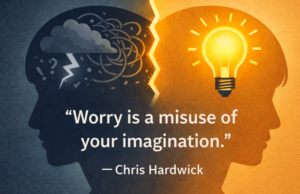
“Worry Is a Misuse of Your Imagination”: The Fix That Actually...
“Worry is a misuse of your imagination.” — Chris HardwickIt’s a line that lands because it names something most people feel but rarely describe well: worry is not just fear. It is creativity pointed in the wrong direction.Imagination is one of the most powerful human tools. It helps people build companies, raise families, write stories, solve problems, and plan for the future. But that same ability can also run endless “what if” scenarios usually negative ones until the mind feels crowded, tired, and stuck.Hardwick’s quote is a reminder that worry often looks like preparation, but behaves like sabotage.What worry really does to the mindWorry is a mental rehearsal for failure. It creates vivid scenes of what could go wrong, then asks the body to react as if those scenes are already happening.That’s why worry feels exhausting. It consumes attention, shortens patience, and makes even normal decisions feel heavier than they are. The mind is working hard—but not productively. You’re generating content, not outcomes.In practical terms, worry often leads to:Overthinking instead of startingDelay disguised as “planning”Worst-case loops that feel urgent but change nothingEmotional spending—burning energy on events that haven’t occurredIf imagination is fuel, worry is a leak.Why worry feels useful (even… Read MoreYourStory RSS Feed

Build an app without coding: Follow the step-by-step guide
You no longer need to know how to code to build an app. You just need clarity. No-code tools have quietly changed who gets to build software. Today, founders, operators, and students can create functional apps using drag-and-drop platforms that handle databases, interfaces, and logic visually.This article walks you through how to build your first app using no-code tools, step by step, without writing any code (hopefully).What no-code app building really meansNo-code platforms allow you to build apps visually. Instead of writing code, you work with pre-built components like forms, buttons, workflows, and databases. Behind the scenes, the platform handles infrastructure, security, and logic. For you, the focus stays on solving a real problem rather than learning a programming language. Popular beginner-friendly no-code tools include Softr, Kissflow, Adalo, Bubble, and Glide.How to build a no-code app Step 1: Define what your app should actually doThe biggest mistake beginners make is starting with tools instead of purpose. Before opening any platform, clearly define:The problem your app is solvingWho it is forThe single most important task it needs to performFor example, your app might help track procurement requests, manage internal approvals, or give customers access to their orders. Keep the first version… Read MoreYourStory RSS Feed
Capital One India: Driving innovation with a country-wide Hackathon and AI...
The buzz around Artificial Intelligence (AI) and Machine Learning (ML) was palpable at the sprawling ballroom where more than 250 attendees gathered for the fifth edition of Pinnacle, the Capital One India AI Summit. The summit was the culmination of a month-long nationwide hackathon, Capital One Launchpad, which garnered a whopping 5,000+ registrations across India and brought together some of the finest technical minds exploring the AI landscape and building innovative solutions.Capital One, which serves more than 100 million customers across a diverse set of businesses, was founded 25 years ago on the belief that no one should be locked out of the financial system. Dedicated to helping foster a world where everyone has an equal opportunity to prosper, Capital One India Launchpad, the flagship innovation challenge, provided a platform where bold ideas met real-world impact, powered by data and intelligence.Launchpad: Hackathon for the Greater GoodDesigned to engage, empower, and collaborate with the next generation of AI/ML innovators, Launchpad focused on one of India’s most vital sectors: agriculture, the backbone of the economy.With a prize pool of Rs 12 lakh, it explored how AI-powered agentic prototypes and solutions could potentially empower farmers and other members of the agricultural sector to… Read MoreYourStory RSS Feed

GTD, PARA or Zettelkasten: Which productivity system fits?
Feeling busy, organised, yet strangely unproductive?The problem may not be your discipline. It may be your system. Over the years, several productivity frameworks have emerged to help people manage work, information, and ideas. Among the most popular are GTD, PARA, Zettelkasten, and Building a Second Brain. Each system solves a different problem, which is why choosing the right one matters more than choosing the most popular one.This guide explains how these systems differ, what each one is best at, and how to decide which suits your needs.What productivity systems are really solvingAt a high level, productivity systems fall into two categories. Some systems help you execute tasks and manage commitments. Others help you organise knowledge and generate ideas. Confusion happens when people expect one system to do everything. Understanding the core intent of each framework makes the comparison much clearer.GTD: Managing tasks without mental clutterGetting Things Done (GTD), created by David Allen, is designed to help people regain control when tasks feel overwhelming.GTD follows a five-step workflow:Capture everything that demands attentionClarify what each item means and the next actionOrganise tasks into lists and projectsReflect regularly through weekly reviewsEngage based on context, time, and energyThe strength of GTD lies in execution.… Read MoreYourStory RSS Feed

Oracle Will Fire 30,000 Employees To Fuel AI Expansion Globally
Oracle — one of the world’s largest enterprise software and cloud computing companies — is reportedly planning to lay off up to 30,000 employees, which would amount to nearly 19% of its global workforce. The potential layoffs are part of a broad restructuring initiative aimed at cutting costs, realigning business priorities and investing more heavily in high-growth areas such as artificial intelligence and cloud innovation. According to internal and industry sources, the cuts may unfold in stages over the coming months as Oracle reviews priorities across various divisions. The company has faced pressure to improve profitability and adapt more quickly to changing enterprise software demand — particularly as rivals intensify competition in AI, cloud services and digital transformation. Slow Growth and Competitive Challenges One of the key factors cited for the workforce reduction is Oracle’s slower growth trajectory in core software and database businesses compared with past performance. While Oracle remains a major player in enterprise IT, customer spend patterns have shifted, with organisations increasingly favouring agile cloud-native services and AI-enabled platforms that are rapidly evolving worldwide. Investors and analysts have noted that Oracle’s traditional licensing and maintenance revenue streams have been under pressure, prompting leadership to seek more streamlined,… Read MoreBusiness Archives - Trak.in - Indian Business of Tech, Mobile & Startups

Hinjewadi To Shivajinagar In 30 Minutes As Pune Metro Line 3...
Pune residents and daily commuters in the city’s bustling western and central corridors are set for a major improvement in travel time with the upcoming Hinjewadi–Shivajinagar Metro Line (Line 3). Built under the Public-Private Partnership (PPP) model, this 23-kilometre elevated metro route is expected to become operational by March 2026, and promises to slash a journey that currently takes around two hours on road to just about 30 minutes by metro. Transforming Daily Commutes for IT Workers Hinjewadi is home to the Rajiv Gandhi Infotech Park, a major IT hub employing over 2.2 lakh professionals across more than 800 companies. Until now, heavy traffic congestion on the roads linking Hinjewadi and central Pune has made daily travel a long and tiring experience for thousands of workers. The soon-to-be-launched metro line is expected to dramatically cut travel time, offering commuters a fast, reliable and stress-free alternative to road transport. Engineering and Connectivity Features A distinctive feature of the Hinjewadi-Shivajinagar Metro project is its innovative double-decker bridge at University Chowk, where the roadway sits at ground level, a flyover above it, and the metro track at the topmost deck — a first in the country. This design not only streamlines traffic flows… Read MoreBusiness Archives - Trak.in - Indian Business of Tech, Mobile & Startups