






I Tested 10+ AI Audio Enhancers: These 7 Actually Fix Bad...
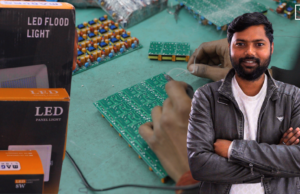
Noida’s LED entrepreneur builds steady growth in a competitive market
When the pandemic disrupted regular employment, Brajmohan Kushwaha found himself reconsidering the stability of a salaried job. A resident of Noida district, he had worked across roles in accounts and purchasing, eventually becoming a purchase manager in the Light-Emitting Diode (LED) lighting sector. The experience offered insight into sourcing, pricing, and the operational side of the industry, but the uncertainty that followed COVID-19 prompted him to think about building something of his own.He first entered into a partnership in the LED lighting business, but differences led to the venture being dissolved. Instead of stepping away from the sector, he set up an independent unit in February 2025. His company, Sugam Lighting Technology, operates under the brand name Megas Lighting and is based in Sector 80, Noida.Today, the enterprise employs five to six people, including two women. Kushwaha says the current annual turnover stands at around Rs 60 lakh, and he hopes to cross the Rs 1 crore mark this year, with a longer-term goal of scaling further over the next five years.Building a local manufacturing baseSugam Lighting Technology manufactures both indoor and outdoor LED lighting products. The business sources raw materials from Delhi-NCR and Ahmedabad, while certain components, such as… Read MoreYourStory RSS Feed

Startup news and updates: daily roundup (February 20, 2026)
From General Catalyst's $5 billion plan for India to Atlassian's India engagement strategy, YourStory brings you today’s headlines with the latest developments across sectors.Featured storiesHow India is powering the growth of Atlassian worldwideAustralia-headquartered collaboration software company Atlassian has rapidly scaled its operations in India, which has become a hub for IT service management and product development.“The younger demographic in India is eager to learn new things and wants to explore different areas. They are always keen to take up new technologies and platforms,” Shamik Sharma, Head of Product - IT Service Management (ITSM), Atlassian India, said in an interview to EnterpriseStory.The expanding talent pool in the country has expertise in the mobile-first approach, design thinking, software engineering, and product development, making them an attractive proposition to Atlassian. The Australia-headquartered company established its India centre in 2018 in Bengaluru. The centre has grown rapidly over the years to over 2,500 employees and is one of Atlassian’s largest R&D hubs outside Australia and the United States. Read more.Latest news General Catalyst to invest $5B in India over the next five yearsVenture capital firm General Catalyst will invest $5 billion in India over the next five years, marking one of the largest VC commitments made to the country.… Read MoreYourStory RSS Feed

NVIDIA Announces $30 Billion Investment in OpenAI to Deepen AI Partnership

Suniel Shetty-Backed Klassroom Edtech Files DRHP for BSE SME IPO Amid...

From Hides to Finish: Unnao’s Leather Industry Story
In Unnao, Uttar Pradesh, leather is not just a finished retail product — it is the result of a layered industrial chain. Raw hides move through processing clusters before reaching manufacturing units, where they are cut, finished, stitched, and assembled into various leather products, like, belts and accessories that serve everyday markets.The district’s leather identity is closely linked to the Banthar cluster, where raw hides are salted, chemically treated, drum-processed, and dried before becoming usable leather sheets. Only after this transformation can the material enter downstream manufacturing units.From Trading to ProductionRaksit Jaiswal, who runs Jaiswal Enterprises in Shuklaganj, began his journey as a trader in leather goods. Exposure to factory operations encouraged him to shift toward production, where he could control finish, durability, and delivery timelines.“Finish decides whether the customer returns,” he notes.While his unit does not tan hides, it works with processed leather sheets, focusing on converting them into finished belts through precision handling.Understanding Material and MarketJaiswal draws a clear distinction between genuine leather and synthetic substitutes. Skilled hands identify quality by touch, edge strength, and how the surface behaves after use. In the belt category, repeat orders depend heavily on how edges hold, whether the polish fades, and… Read MoreYourStory RSS Feed
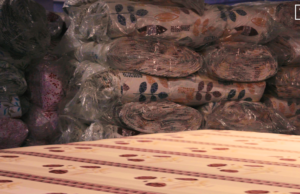
From Trading to Manufacturing: Hapur’s Textile Shift
In Hapur, Uttar Pradesh, textiles are not just retail goods — they are a structured manufacturing ecosystem. Bed sheets, comforters, quilts, and bath linens move from factory floors to homes, hotels, and institutional buyers, sustaining a chain that links yarn suppliers, loom operators, printers, finishers, packers, and transporters.Within the district, Pilkhuwa has long been recognised as a textile centre. Over time, the cluster has shifted from being largely trade-oriented to strengthening its manufacturing base, giving units greater control over quality, timelines, and product development.Building a Manufacturing IdentityArjun Singhal, who runs Bharat Textile Mills at the Pilkhuwa textile centre, represents this transition. His unit manufactures bed sheets, comforters, quilts, bath sheets, and foam décor items — products that serve both retail households and bulk buyers.He draws a clear distinction between trading and manufacturing. Trading depends on external suppliers, while manufacturing allows control over finish, consistency, and delivery schedules.“When you manufacture, you control the quality promise,” he notes.The unit began with around 120 employees and later expanded to approximately 200, with additional indirect employment generated through logistics and packaging services.From Yarn to Finished ProductThe production cycle begins with yarn sourced from Gujarat. It is woven into grey cloth on looms before undergoing… Read MoreYourStory RSS Feed
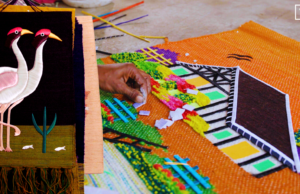
From Loom to Living Rooms: Ghazipur’s Jute Wall Hangings
In Ghazipur, Uttar Pradesh, jute wall hangings are not just décor pieces. They hang in homes as framed backdrops, sit near prayer spaces, and travel as wedding gifts — carrying a rustic aesthetic that blends tradition with contemporary taste.Behind each finished piece lies a distributed production chain across weaving units, dyeing setups, and home-based finishing tables, particularly in and around Paharpur Kalan village.This craft cluster has gained structured visibility through the One District One Product (ODOP) framework, which supports district-identified products through credit access, training exposure, and exhibition platforms.A Craft That Grew Into a ClusterBabar Ali of Paharpur Kalan traces the origin of this ecosystem to his father, Mohammad Israil Ansari, who introduced the craft in the village and trained others until production expanded beyond a single household.Initially focused on thread-based items, the unit gradually shifted to wool and eventually to jute — responding to buyer demand and scalability. Early products moved through traders to markets in Varanasi and Delhi, while some orders reached international destinations such as Italy, Japan, and Nepal through intermediaries.As demand grew, production divided into specialised tasks: dyeing, weaving, stitching, and finishing handled by different artisans across households.Material, Process, and FinishRaw jute is sourced primarily from… Read MoreYourStory RSS Feed