



Paytm Shares Plunge About 5% Despite Strong Q3 Performance
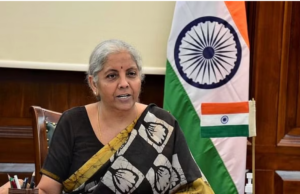
FM Nirmala Sitharaman marks record tenure with ninth budget
Finance Minister Nirmala Sitharaman, who will present her ninth consecutive Budget on Sunday, is the longest-serving finance minister to hold the post continuously.Sitharaman took charge of the Finance Ministry on May 31, 2019, and has steered the economy through the COVID-19 pandemic and geopolitical turmoil, making India the fastest-growing major economy in the world.Sitharaman completed six years and eight months in office on January 31, 2026. On February 1, she will present a record ninth budget in a row.Nirmala Sitharaman holds the distinction of being India's first full-time female Finance Minister, following Indira Gandhi's interim stint in 1969, and has overseen key structural reforms like public sector bank mergers and GST stabilisation that bolstered the formal economy.Also ReadRoad to Budget 2026: Balancing growth, fiscal discipline, and relief for the middle classAhead of the Budget session, Prime Minister Narendra Modi had said that Sitharaman presenting the Union Budget for the ninth consecutive time "will be recorded as a matter of pride in India's parliamentary history".Former prime minister Morarji Desai had presented the Union Budget on 10 occasions, while P Chidambaram presented the Budget nine times, but not for consecutive years.The other longest-serving Finance Minister at a stretch was C D Deshmukh,… Read MoreYourStory RSS Feed

Swiggy Shares Slide 8% As Brokerages Turn Cautious On Instamart

Groww, Edelweiss Eye Acquisition of Prudential’s India Mutual Fund Business

Insurers Recalibrate Amid IRDAI Push; Acko Commits to ‘Pure’ Life Insurance

Healthians Founder Deepak Sahni transitions from diagnostic pioneer to startup mentor
In the world of Indian startups, where growth at all costs often overshadows sustainable impact, Deepak Sahni’s journey as a serial entrepreneur stands out. From Founding Healthians and scaling the company from scratch to a Rs 3,000 crore diagnostic powerhouse, Sahni is now moving away from the executive trenches to a new role: the Multiplier.With a dedicated commitment of Rs 100 crore to be deployed over the next three years, Sahni is sharpening his focus on early-stage founders reimagining consumer behavior and deeptech, and the burgeoning GenZ ecosystem. His investment philosophy is centered on areas where he sees the most structural change: consumer brands, deeptech, and AI-driven solutions targeting Gen Z. His current portfolio already reflects this diverse yet focused approach, featuring brands like Handpickd, Beanly, Indian Sneaker Fest (ISF), Fiona Diamonds, Repill, and Gignaati AI. To date, Sahni has already deployed approximately Rs 4.5 crore across these ventures, but the capital is only half the story. Sahni is now not looking for just another business; he’s on the hunt for “Problem Solvers”.Over the last decade, Sahni championed a simple yet powerful belief that quality healthcare, especially diagnostics, should be accessible, affordable, and convenient for every Indian. By pioneering the… Read MoreYourStory RSS Feed

Apple Sees All-Round Growth in India as iPhone, Mac, iPad Sales...

CRED posts 16% jump in FY25 revenue, narrowing losses on broader...
CRED reported a 16% increase in operating revenue for the year ended March 2025, as broader product adoption among affluent users helped the fintech firm improve monetisation and narrow losses.The Bengaluru-based company posted consolidated operating revenue of Rs 2,735 crore in FY2024–25, up from the previous year, according to a statement on Thursday. Gross margins stood at about 70%, while operating losses fell 51% to Rs 298 crore, reflecting tighter cost controls and improved operating leverage. Total losses declined 11.5% to Rs 1,457 crore.CRED said engagement on its platform increased during the year, with monthly transacting users rising 14.5% to 12.6 million. Transaction frequency climbed 34% to 14.4 transactions per user per month, while total payment value grew 23% year-on-year to Rs 8.5 lakh crore.The company continues to position itself as a platform for high-credit-quality consumers. More than half of all new credit cards issued in India go to CRED members, the company said, and about 60% of India’s multi-card holders are active on its platform. CRED also said it holds the leading market share in credit card bill payments.About 45% of active members used three or more products during the year, helping CRED generate an average revenue per user… Read MoreYourStory RSS Feed

Vishal Sharijay Garg of Hobo.Video on How UGC, AI, and Creator...

Rest or avoidance? How to differentiate between the two
In a world that glorifies constant motion, rest has become both a remedy and a refuge. We’re encouraged to slow down, log off, take breaks, and protect our energy. And for many of us, that advice is necessary. Exhaustion is real. Burnout is real. Overstimulation is real.But there’s a quieter confusion that often follows this permission to rest: Am I genuinely restoring myself—or am I avoiding something uncomfortable inside me?On the surface, rest and avoidance can look identical. Both involve stepping back. Both can include solitude, silence, and disengagement. Both may feel like relief. Yet their long-term effects are very different. One replenishes you. The other quietly drains you, because what you avoid doesn’t disappear; it waits.Understanding the difference between resting and avoiding what you feel isn’t about self-judgment. It’s about self-honesty. And that honesty, though uncomfortable at times, is what turns rest into healing instead of hiding.What rest really isTrue rest isn’t just the absence of work—it’s the presence of safety. When you are resting, your nervous system begins to soften. Your mind slows without spiralling. Your body feels allowed to exist without performing or proving.Rest can look like sleep, quiet reading, slow walks, prayer, journaling, or simply sitting… Read MoreYourStory RSS Feed