





In Kanpur district, a small mushroom unit runs on controlled temperatures...
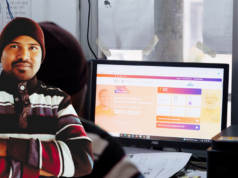
Anubhav Shukla lives in Kanpur district of Uttar Pradesh, where he runs a small, climate-controlled unit growing button mushrooms. His work relies on creating artificial temperature and humidity inside enclosed rooms, allowing mushrooms to be grown year-round rather than only in the winter season.The unit follows a defined process—prepared compost is filled into bags, mixed with spawn, and moved into an air-conditioned chamber where the temperature is first held steady to allow the mycelium to spread. A controlled drop in temperature and careful layering triggers pin formation, followed by harvests that continue in multiple flushes over several days. Throughout the cycle, air circulation, humidity, and carbon dioxide levels are monitored to keep conditions stable.Button mushrooms are grown primarily for the table market, and Shukla limits his work to this variety for now, even though he is familiar with others, such as oyster and medicinal mushrooms. “This crop needs precision more than land,” he explains, noting that artificial control allows consistent output even as weather patterns shift.From software screens to growing chambersBefore moving into agriculture, Shukla worked as a frontend software developer, building skills in web technologies and holding a regular job. The shift was gradual rather than abrupt. While training at… Read MoreYourStory RSS Feed
In Kaushambi, a small electronics repair shop builds steady local demand
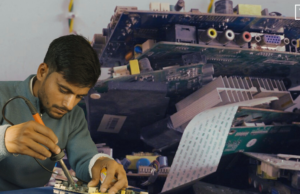
Pradyuman Kumar, a resident of Barwari village in Kaushambi district, runs a computer and electronics repair shop in Manjhanpur that he set up a little over two years ago. The shop handles everyday repair work for laptops, desktops, printers, and LED televisions, including circuit and motherboard-related issues that many nearby technicians prefer not to take on. For Kumar, the business is the result of a long period of learning, migration, and cautious decisions rather than a single turning point.Learning the trade alongside studiesKumar’s entry into computer repair began while he was completing his graduation. He learned the basics in Prayagraj, where he worked at different repair shops to understand how devices were diagnosed and repaired in real-world conditions. The work appealed to him because it combined problem-solving with a growing demand for technology services. He later spent time in Gujarat, hoping to further expand his skills, but returned when the work there did not align with what he had already learned.Back in Uttar Pradesh, he continued to broaden his experience by working at repair shops in Prayagraj and later in Lalpur, where he repaired LED televisions. These years were marked by steady learning rather than rapid progress. He recalls first… Read MoreYourStory RSS Feed

Reliance to Launch Bottled Iced Tea with Brew House Brand Relaunch

Zupee Lays Off 200 Jobs in Second Restructuring Phase as Company...

Apple Posts Double-Digit Growth In India In Q1

DoT Reviewing Amazon’s Satcom Application, Yotta Rejected

Economic survey flags digital addiction as a quiet threat to growth
India is growing at nearly 7% annually, according to the Economic Survey 2025-26. Its demographic dividend, hundreds of millions of young people entering the workforce, is widely seen as the engine of future prosperity. But the survey has identified an unexpected obstacle to that future: the screens in everyone's hands.For the first time, the Economic Survey 2025-26 places excessive digital consumption alongside obesity and non-communicable diseases as a structural threat to human-capital formation. Past surveys treated technology primarily as an economic accelerator. This one warns that the same devices powering India's digital economy may be undermining the cognitive foundations needed to sustain it.The concern is not access, but behaviour. Unlike earlier policy debates focused on bringing smartphones to more people, the survey argues that digital platforms, engineered for instant gratification through short videos, endless scrolling, and algorithmic rewards, are eroding sustained attention, deep learning, and the capacity for delayed gratification.1337 people loved this storyMillions of Indian gig workers are stuck in low-pay jobs, Economic Survey findsBy positioning the issue in the education and health chapter rather than in technology or industry sections, policymakers signal that this is fundamentally about human capability. The document even invokes classical Indian philosophy, drawing a… Read MoreYourStory RSS Feed

Elon Musk’s SpaceX in Merger Talks With xAI Ahead of Potential...

IPO-Bound Turtlemint’s Loss Widens 26% To INR 125 Cr In H1...
Jaro Education posts strong Q3 FY26 growth, signals rising demand for...
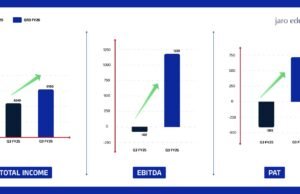
Jaro Education reported a strong operational and financial performance in the third quarter of FY26, reflecting growing demand among working professionals for outcome-led, industry-aligned upskilling across technology, leadership, and hybrid business domains.Jaro Institute of Technology Management and Research Limited posted revenue from operations of Rs 6,000.96 lakh in Q3 FY26, marking a 38.6% year-on-year increase compared to Rs 4,329.18 lakh in the corresponding quarter last year. Including other income, total income rose 42.12% YoY to Rs 6,180.47 lakh, indicating both scale and diversification.The company’s cost discipline contributed significantly to improved profitability. Total expenditure increased by 7.53% YoY, well below the pace of revenue growth, resulting in improved operating leverage. EBITDA stood at Rs 1,229.36 lakh, compared to Q3 FY25, with margins expanding to 19.89%.Profitability strengthened across metrics. Profit after tax (PAT) came in at Rs 703.06 lakh, while PAT margins improved to 11.38%. The quarter marks Jaro’s second set of financial results since its IPO in September 2025, underscoring its focus on profitable, capital-efficient growth.Key drivers behind Q3 performanceAccording to the company, Q3 performance was driven by a combination of factors, including the scale-up of institutional partnerships, the launch of new programs with premium academic institutions, and an increase in… Read MoreYourStory RSS Feed