




General Atlantic backs Balaji Wafers amid sustained PE interest in consumer...
Gujarat-based snacking brand Balaji Wafers on Thursday said it has entered into a definitive agreement to receive strategic investment from General Atlantic for an undisclosed value. According to older media reports, Balaji owners were looking to dilute 10 to 15% stake at 10 times EBITDA. The company's valuation is around $3.5-4 billion, but the promoters are expecting around $5 billion in valuation. The deal comes amid larger interest in Indian family owned businesses particularly from global private equity players. In March last year, Singapore-based Temasek acquired 10% stake in Haldiram for Rs 8,500 crore, valuing the business at Rs 85,000 crore. Following this, Haldiram also secured funds from L Catterton and Alpha Wave Global and Abu Dhabi's International Holding Co. In mid 2025, ChrysCapital acquired a 90% stake in bakery chain Theobroma for Rs 2,410 Crore. Following this, Vixar Partners led a consortium in December 2025 to pick up a 45% stake in The Belgian Waffle Co for Rs 770 Crore, valuing the dessert giant at ~Rs 1,700 Crore."General Atlantic’s investment will support our efforts to establish and operate world-class facilities, invest in innovation and build a professional team to help drive the next phase of growth for the Company.… Read MoreYourStory RSS Feed

Kalyan Jewellers Stock Tumbles 12-14% Low in a Day Under Pressure:...

Organic vs paid growth: What works better for startups?
Want faster growth, but not at the cost of burning cash? Every startup eventually faces the same dilemma. Should you invest in organic growth that compounds slowly, or paid growth that delivers instant traction?For Indian startups, this is not a binary choice. Organic and paid growth serve very different purposes, and choosing the wrong one at the wrong stage can stall momentum or drain limited capital. The real question is not which works better, but which works better for your startup right now.This article breaks down organic vs paid growth through an Indian startup lens, using real examples, ROI data, and practical recommendations.What do organic and paid growth really mean?Organic growth Organic growth focuses on building traction through channels that do not require continuous ad spend. These include SEO, content marketing, referrals, email marketing, and word-of-mouth. The payoff is slower, but the results compound over time.Paid GrowthPaid growth relies on advertising channels such as Google Ads, Meta ads, LinkedIn ads, and sponsored placements. It offers speed, control, and scale, but demands ongoing budgets to sustain results. Neither approach is inherently superior. Their effectiveness depends on your startup’s stage, budget, and market dynamics.Why organic growth works well for early-stage startupsOrganic growth… Read MoreYourStory RSS Feed

Ubisoft Cancels 6 Games, Shuts Studios in Major Restructuring

Chargeup Raises INR 22 Crore in Funding Led by IAN Group

Urban Ladder Cofounder’s AC Startup Optimist Raises $12 Mn

Reliance Industries to Purchase Sanctions-Compliant Russian Oil in February–March

Ashish Goel’s Optimist raises $12M in seed funding led by Accel,...
Cooling solutions startup Optimist on Thursday raised $12 million in seed funding led by Accel and Arkam Ventures along with other angel investors. The newly-raised capital will be used to scale manufacturing, research and development, and go-to-market operations, the company said. Optimist was founded in 2024 by Ashish Goel, ex-CEO and Co-founder of Urban Ladder, and Pranav Chopra. The company is developing cooling systems for India’s extreme heat and energy-constrained market. Through R&D efforts, the company has been able to develop a cooling solution that will reduce electricity bills and ease pressure on electricity grids. According to the company’s website, Optimist’s cooling solutions consume 70% less energy than conventional air conditioners. Also ReadGreenCell Mobility raises $89M to expand its electric bus fleetThe company is planning to deliver its products to households by February 26 in Delhi NCR, Rajasthan, Telangana, and Bengaluru. It is looking to sell its products through a mix of direct-to-consumer channels and exclusive brand stores, targeting residential and small commercial customers initially. “We want India to be better prepared for heat going up and we want to reduce the energy cost of that cooldown, which obviously has many implications. It has implications in customer affordability. It has implications on our national energy… Read MoreYourStory RSS Feed

At DevSparks Pune 2026, explore 4 core themes shaping dev careers
Developers in Pune, here’s your next big career leap!With DevSparks returning to Pune on February 28, 2026, expect a day packed with practical insights, deep technical talks and hands-on strategies tailored for developers building tomorrow’s tech using AI.Register for DevSparks Pune here.At the heart of this summit are four major themes that empower devs with skills, frameworks, and real-world perspectives on AI:Agentic AI: The next waveThe first big theme puts agentic AI front and centre, moving beyond static models to active, autonomous AI systems that can drive coding workflows, business processes, and multi-agent orchestration. Developers will get into how these systems are designed, orchestrated, and deployed in production, with examples spanning multimodal AI that understands text, code, images, video, and speech. Discussions will unpack real use cases that bridge experimentation and production readiness, helping developers think about reliability, safety, and scale.Integrating and scaling AI use casesNext up is the challenge and opportunity of bringing AI into real applications at scale. This theme explores how to build AI-first frameworks that integrate seamlessly across sectors like fintech, health, commerce, manufacturing, and agritech. Developers will explore Edge AI and IoT scenarios where intelligence lives close to devices and networks, not just in the cloud, and learn… Read MoreYourStory RSS Feed
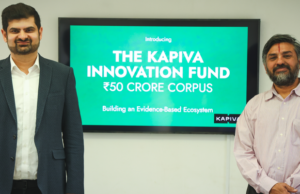
Kapiva launches Rs 50 Cr fund to support Ayurveda innovation
Direct-to-consumer (D2C) Ayurvedic brand Kapiva has launched a Rs 50 crore fund aimed at accelerating research and innovation in Ayurveda across a wide range of segments.Named the Kapiva Innovation Fund (KIF), the initiative will support projects from academia, research laboratories, and startups working on advancing Ayurvedic science and developing clinically validated solutions to address health challenges, the company said in a statement.The fund will focus on areas such as novel formulations, standardisation and phytochemistry, application of AI in Ayurveda, pre-clinical and clinical studies, next-generation extraction technologies, bioactive enhancement, and technology-driven wellness models, among others.“For decades, Ayurveda has been seen as either faith-based or purely traditional wisdom. We believe its future lies in being outcome-led and evidence-backed. This fund is a long-term bet on that future,” said Ameve Sharma, Founder, Kapiva. Whether a project is at an early research stage or close to commercialisation, KIF said it will provide access to capital, mentorship, and clinical resources. This comprehensive support is designed to help high-potential scientific ideas evolve into viable, real-world solutions.“By investing up to Rs 50 crore in research, collaborations and new technologies, Kapiva wants to help build an ecosystem where Ayurvedic products are developed and tested like modern medicine, yet… Read MoreYourStory RSS Feed