Home Blog Page 24

PB Fintech Cancels QIP Plan After Shareholder Backlash

Fintech major PB Fintech said that the management has dropped its plans, announced earlier this week, to raise funds via a qualified institutional placement (QIP). The company was responding to a report published earlier in the day which said PB Fintech plans to raise $1 Bn via the QIP. Notably, the company’s plans to consider a fundraise for inorganic acquisitions triggered a heavy sell-off in its shares. Following this, the company canceled its board meeting yesterday to deliberate on the fundraise.  However, a report by Bloomberg said today that the company would look to raise $1 Bn from the QIP post an investor outreach. “In this regard, we would like to clarify that the news is factually untrue. The management or the board are not considering the QIP,” the company informed the bourses. The intimation around the QIP was made alongside PB Fintech’s financial disclosures for Q3 FY26.  In a note on Tuesday, brokerage JM Financial said that a QIP aimed at funding international expansion at a time when management bandwidth is already focused on healthcare could introduce some volatility in its operations. “With the company already sitting on an ₹5,000 Cr+ cash pile, the requirement of a QIP suggests…  ​Read MoreInc42 Media

Inside Ballia’s bindi-making network, led by women’s groups

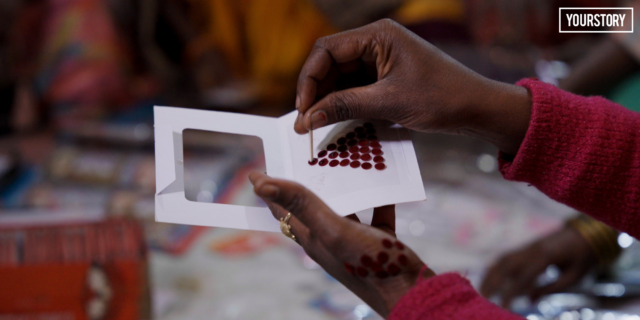
Bindi-making in Ballia rarely looks like an industry from the outside. It happens in homes and small workspaces, where sheets are cut into tiny shapes, pasted carefully onto cards, and finished with stones, beads, pins, or thread. The result is a product that moves through weddings, temple visits, local markets, and exhibition stalls, while quietly supporting a chain of livelihoods driven largely by rural women and steady handwork.One of the people organising this work is Geeta Verma, a resident of Gadwar in Ballia. Since 2017, she has been linked to bindi production through a women’s self-help group, helping turn what was once scattered home-based activity into a coordinated source of income. Ballia’s bindi work has also gained visibility through the state’s One District One Product (ODOP) programme, which has created clearer pathways for local producers to reach wider markets.From entry to enterpriseVerma did not come from a business background. She recalls a period when she was not engaged in steady work and spent most days around home. A visit to the district industry office changed that direction. Encouraged to explore a product-based livelihood, she studied bindi-making and felt it was a skill she could learn and grow alongside other women.After a short training…  ​Read More​YourStory RSS Feed

Inside Bulandshahar’s Pottery Cluster, Where Craft Meets Market

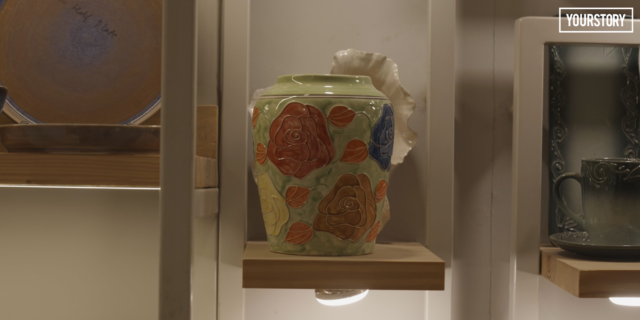
In Khurja, located in Uttar Pradesh’s Bulandshahar district, pottery is more than a decorative product. Ceramic wares made here find place in homes, hotels, galleries, and export showrooms, supporting a long chain of livelihoods—from clay preparation and moulding to painting, glazing, and firing.Recognising this deep-rooted ecosystem, ceramic products have been identified as Bulandshahar’s district product under the One District One Product (ODOP) initiative, with Khurja’s pottery cluster at its core.At the heart of this cluster is Guljeet Singh Minhas, an ODOP beneficiary who runs Minhas Pottery with his family and a team of local artisans. The workshop traces its origins to 1960, when his father moved from Kanpur to Khurja and started the unit with technical training in ceramics and limited resources. Over time, the enterprise grew steadily, shaped by Khurja’s strong craft culture.Today, Minhas Pottery focuses on artistic ceramics for galleries, exports, and established Indian brands, consciously avoiding mass-market production. According to Minhas, this approach helps retain skilled artisans within the district and ensures stable local employment.Raised within the workshop environment, Minhas later studied ceramic engineering, enabling him to modernise operations while preserving handmade quality. In 2012, he replaced coal and diesel-based kilns with gas-fired kilns, improving product consistency,…  ​Read More​YourStory RSS Feed

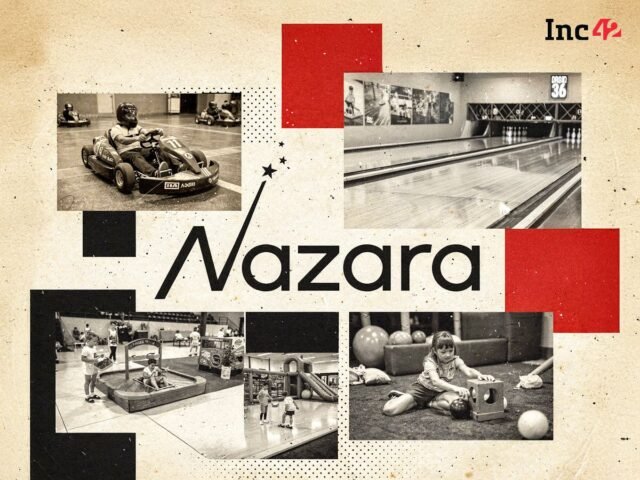
Beyond Screens: Why Nazara Is Doubling Down On Offline Gaming

India’s gaming boom has largely unfolded on mobile screens and livestream platforms. Now, gaming major Nazara Technologies is betting that the next phase of growth will happen offline. Through its Funky Monkey centres, the gaming major is building a network of indoor play arenas, a strategy that promises faster cash flows, stronger brand touchpoints, and insulation from platform volatility. While Nazara is widely recognised for its mobile games, esports platforms and global IP portfolio, its offline gaming business is now scaling up as the company is opening one to two new centres every month. What began as an experimental vertical is increasingly being positioned as a core pillar of Nazara’s long-term strategy, at least the company has indicated so in its Q3 earnings call. In Q3 FY26, Nazara reported a revenue of ₹30.4 Cr in its offline gaming segment which includes Smaash and Funky Monkey. In the quarter, Smaaash contributed the larger share of offline revenues with ₹24.3 Cr in revenue and ₹7.1 Cr in EBITDA, compared to Funky Monkeys’ ₹6.1 Cr in revenue and ₹3.7 Cr in EBITDA. While Smaaash currently drives a higher topline, Nazara is increasingly sharpening its focus on Funky Monkeys, given its faster scalability, quicker…  ​Read MoreInc42 Media

NSE Q3 net profit up 15% QoQ on higher trading volumes and cost savings

National Stock Exchange of India Ltd (NSE) reported Q3FY26 consolidated total income of ₹4,395 crore, up from ₹4,160 crore in Q2FY26. Profit after tax rose 15% QoQ to ₹2,408 crore, supported by higher trading volumes in equity cash and derivatives segments and cost efficiencies.​Read More

Mitsubishi Electric India to invest ₹2,100 crore in Chennai facility at Mahindra Origins

Mitsubishi Electric India inaugurated a ₹2,100 crore air-conditioner and compressor plant near Chennai, boosting localisation, manufacturing capacity and employment, while reinforcing Tamil Nadu’s position as a key electronics and industrial hub.​Read More

Gold and Silver Prices in India End Lower on February 6: Silver Crashes 6%, Gold Dips at Market Close

Gold and silver prices in India closed lower on February 6, 2026, amid heightened volatility and profit-booking pressure. Gold held relatively firm above ₹1.52 lakh per 10 grams on MCX but edged down, while silver extended losses with a sharp 6% crash on MCX futures. A stronger US dollar and easing geopolitical tensions weighed on sentiment, overshadowing steady domestic demand.​Market Close Gold and Silver PricesRetail closing rates for gold and silver across key cities showed declines, reflecting MCX weakness and local making charges. Prices are indicative and may vary due to local taxes, purity, and jeweller premiums.​ City24K Gold (₹/10g) Today24K Gold (₹/10g) Yesterday22K Gold (₹/10g)Silver (₹/kg) TodaySilver (₹/kg) YesterdayDelhi1,54,5601,56,0001,41,6902,80,0003,00,000Mumbai1,54,4101,55,8001,41,5402,80,0003,00,000Chennai1,56,2101,57,7001,43,1902,80,0003,00,000Bengaluru1,54,4101,55,8001,41,5402,80,0003,00,000Hyderabad1,54,4101,55,8001,41,5402,80,0003,00,000Kolkata1,54,4101,55,8001,41,5402,80,0003,00,000 Intraday Gold and Silver MovementGold MCX futures opened around ₹1,52,260 per 10g but fluctuated widely, hitting highs near ₹1,54,000 before closing down 0.82% at ₹1,50,316 for the March contract, a ₹1,230 drop. Silver saw sharper swings, opening higher but crashing to intraday lows amid heavy selling, rebounding partially to close near ₹2,39,000/kg after a 6% plunge overall. Volatility was pronounced in silver, with ₹10,000+ intraday moves, compared to gold’s more controlled range.​Gold Price AnalysisGold retail prices dipped ₹1,000-1,400 per 10g from yesterday’s closes, mirroring a 0.8-0.9% MCX decline despite safe-haven…  ​Read MoreStartupTalky- Business News, Insights and Stories

Veranda Learning Q3 profit soars 110% as ‘Veranda 2.0’ strategy gains traction

Education services provider Veranda Learning Solutions reported a surge in third-quarter profit on Friday, as a sharp rise in student enrollments and a strategic focus on cost optimisation under its “Veranda 2.0” restructuring plan bolstered the bottom line. This strategic pivot marks a transition from the company’s “Veranda 1.0” phase, which was characterised by rapid acquisitions and expansion to build a unified technology stack across diverse learning formats.The Chennai-based company , which offers services ranging from K-12 education to professional certifications, saw its net profit jump 110% to Rs 17 crore for the quarter ended Dec. 31, 2025, up from the same period a year earlier. This performance was underpinned by a 52% increase in revenue from operations, which reached Rs 117 crore, driven primarily by robust demand in the government test preparation and commerce verticals.The company’s operational efficiency initiatives, including process standardisation and resource optimisation, led to a 328% surge in EBITDA to Rs 53 crore, while gross profit margins remained strong at 65%. “All business segments delivered healthy growth during the period. With the approval of the commerce demerger and completion of the vocational divestment, we are now better positioned to sharpen focus and scale our core verticals-…  ​Read More​YourStory RSS Feed

The vanilla ice cream complaint that stumped GM engineers

It sounded like a joke. It turned out to be a masterclass in problem-solving.A customer once wrote to General Motors, specifically its Pontiac division, with a complaint so strange that executives initially assumed it was fake. His new car, he said, refused to start only after buying vanilla ice cream.Every other flavour worked just fine. Here’s how this complaint led to become a lesson! A complaint that made no senseThe letter explained a simple family ritual. After dinner, the family would vote on an ice cream flavour. The customer would then drive to the store, buy it, and head home. After purchasing his new Pontiac, something odd started happening.If the chosen flavour was vanilla, the car would stall on the return trip and refuse to restart. If the family picked chocolate, strawberry, or any other flavour, the car behaved normally. Same driver. Same route. Same car. Only one variable changed. To most people, this sounded absurd.Why GM took it seriously anywayInstead of dismissing the complaint, GM did something unusual. They sent an engineer to investigate.The engineer followed the customer, repeated the experiment, and confirmed the pattern. Vanilla trips did indeed fail. Other flavours did not. He began logging everything such…  ​Read More​YourStory RSS Feed

SEBI Clears IPOs Of InCred Holdings, SEDEMAC

Markets regulator SEBI has greenlit the initial public offerings (IPOs) of new-age tech companies SEDEMAC and InCred. In its weekly update, the markets regulator said it issued observation letters to the fintech company yesterday and the deeptech company today.  In SEBI’s parlance, the issuance of an observation letter is a formal go-ahead to proceed with the IPO.  InCred filed its IPO papers confidentially in November. While exact details of the issue size is not clear, the company earlier sought shareholders’ approval to raise up to  ₹1,500 Cr via a fresh issue of shares from its IPO. As per reports, the total size of the IPO is expected to be in a range of ₹3,000 Cr to ₹4,000 Cr.  As per its last disclosed financial performance for the fiscal year FY25, InCred Holdings’ net profit surged 21% to ₹373.1 Cr from ₹309 Cr in the previous fiscal. Operating revenue zoomed 47% to ₹1,873.6 Cr from ₹1,272.7 Cr in FY24. Meanwhile, SEDEMAC Mechatronics, which is an IIT Bombay-incubated deeptech company, also filed its DRHP in November. Its public issue would comprise solely an offer-for-sale component, with investors and promoters cumulatively selling up to 80.43 Lakh shares. The selling investors include A91 Partners…  ​Read MoreInc42 Media

13,000FansLike
9,000FollowersFollow

Most Popular