
Home Blog Page 27

Bharat Taxi Launched by Amit Shah to Provide No-Commission Platform for Drivers
Bharat Taxi Launched by Amit Shah to Provide No-Commission Platform for Drivers

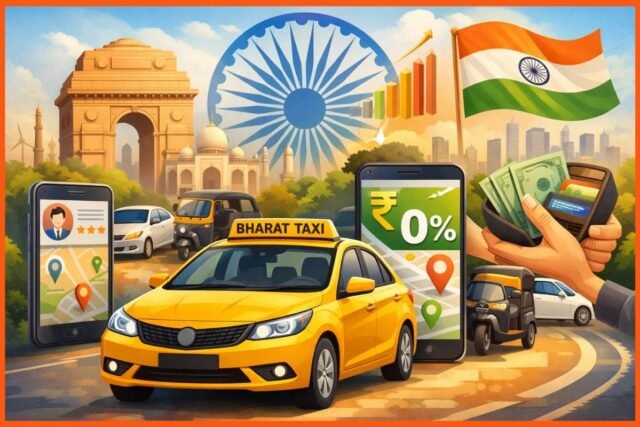
Bharat Taxi, India’s first ride-hailing platform supported by the government, was inaugurated by Union minister Amit Shah. The platform is based on the idea of shared ownership. At the 5 February launch ceremony in Delhi NCR, Shah stated that the platform’s primary objective is to provide cab drivers more agency. Shah also mentioned that the drivers will not be paid a commission.Drivers will receive the full amount of the fare displayed on the application. Shah also stated that this inauguration serves to further the endeavour of providing welfare to the “Sarthis” (drivers) community. Within three years, this cab service will cover the entire country, stretching from Kashmir to Kanyakumari and Dwarka to Kamakhya.Bharat Taxi to Free Country from Private PlayersThis new software, according to Shah’s announcement a month ago, will strive to wean the country’s cab drivers off of private enterprises. Drivers would be able to retain all of their profits from each ride thanks to the new service, he added. Sahkar Taxi Cooperative Limited would run Bharat Taxi as a cooperative, with drivers acting as co-owners.In order to take part, drivers need to purchase a minimum of 5 shares, totalling INR 500. They will then be eligible for stakeholder…  ​Read MoreStartupTalky- Business News, Insights and Stories
Capillary Technologies Q3: Profit Declines 22% YoY To INR 8 Cr

Capillary Technologies Q3: Profit Declines 22% YoY To INR 8 Cr

SaaS company Capillary Technologies reported a 22% decline in its consolidated net profit to ₹8 Cr in the December quarter of 2025 (Q3 FY26) from ₹10.3 Cr in the year-ago period. Sequentially, profit increased multifold from ₹28.8 Lakh. Revenue from operations increased 15.7% to ₹184 Cr during the quarter under review from ₹159 Cr in Q3 FY25. On a quarterly basis, it grew 2.6% from ₹179.3 Cr.  EBITDA grew 17% to ₹28.7 Cr in the quarter under review from ₹24.5 Cr in Q3 FY25. Total expenses for the quarter increased 17% to ₹159 Cr from ₹136 Cr in the same quarter last year.  Meanwhile, Capillary’s net revenue retention (NRR) stood at 111%, as of December 31, 2025. NRR is a metric which shows how much revenue a company retains from its existing customers over a period, after accounting for upgrades, downgrades, and churn. This is different from annual recurring revenue (ARR) as it calculates total overall revenue. Capillary’s organic and inorganic NRR stood at 115% and 94%, respectively. While organic NRR includes revenue from core offerings, inorganic NRR calculates revenue from acquired subsidiaries. Capillary helps businesses improve customer engagement, drive sales and build brand loyalty through its AI-powered platform. It…  ​Read MoreInc42 Media

ITC, Godfrey Phillips Shares Surge After January Sell-Off as Cigarette Stocks Stage Strong Comeback

ITC, Godfrey Phillips Shares Surge After January Sell-Off as Cigarette Stocks Stage Strong Comeback

Shares of leading cigarette makers ITC Ltd and Godfrey Phillips India rose sharply on Thursday after a brutal start to 2026, as investors returned to tobacco stocks following last month’s heavy sell-off triggered by new cigarette taxes.The rebound comes after January saw one of the worst months for cigarette stocks in years. ITC, in particular, recorded its poorest January performance on record, with sharp losses driven by concerns over higher excise duties and their impact on demand and profitability.On 6 February, market sentiment shifted. Investors stepped back into beaten-down stocks, pushing ITC and Godfrey Phillips shares higher, as value buying and stronger quarterly results helped improve confidence.Excise Duty Shock: Why Cigarette Stocks Crashed in JanuaryThe sell-off began after the government implemented a new excise duty on cigarettes and tobacco products from 1 February 2026. Under the revised structure, cigarette manufacturers must pay additional duties ranging from ₹2,050 to ₹8,500 per 1,000 sticks, depending on product length, on top of the existing 40% GST.This led to fears of sharp price increases at the retail level, which could affect consumer demand and volumes. Since cigarettes contribute a large share of revenue and profits for companies like ITC, the market reacted quickly.In January,…  ​Read MoreStartupTalky- Business News, Insights and Stories

Gaming company JetSynthesys acquires EverMerge as it looks to expand globally

Gaming company JetSynthesys acquires EverMerge as it looks to expand globally

Digital entertainment and video gaming company JetSynthesys on Thursday acquired EverMerge, a globally popular merger game from Big Fish Games Inc. Terms of the deal were not disclosed. Big Fish Games is a subsidiary of global entertainment and gaming content creation firm Aristocrat Leisure Ltd.EverMerge has generated over $350 million of lifetime revenue since its launch five years ago and is positioned among the top 100 mobile-grossing video games of all time, the company said in a statement. Its key markets include the US and Western Europe, where it holds franchise potential amid strong daily active users and retention metrics. This acquisition is in line with India-based JetSynthesys’ global expansion plan, and will help it build a video gaming ecosystem that spans genres, geographies, and communities. Also ReadKrafton leads investment in JetSynthesys to fuel growthJetSynthesys is planning to expand EverMerge’s reach into new growth regions, including India, by leveraging the firm’s expertise in community engagement, brand partnerships, and data-driven user acquisition to scale the title and growth opportunities, it said. “At a time when India is recognising the potential of the orange economy, pioneered by JetSynthesys, this acquisition is an important milestone. EverMerge’s success across Western markets presents an incredible opportunity to…  ​Read More​YourStory RSS Feed

Best AI Tools for Face Recognition

Best AI Tools for Face Recognition

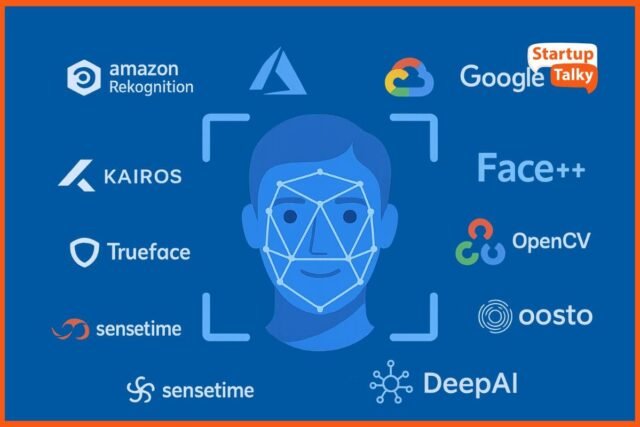
Face recognition software created with the help of artificial intelligence utilizes advanced algorithms to detect, analyze, and recognize human faces within video frames or digital images by extracting discriminative facial features and creating mathematical representations known as facial signatures. Face recognition systems typically operate through a series of steps: face detection, feature extraction, face alignment, and matching against a database to recognize or authenticate. Some salient features include real-time detection, high accuracy levels, anti-spoofing, and multi-face support. Recent solutions employ deep learning and neural networks to improve the speed and precision, with applications in security, access control, digital onboarding, and customized user experiences in various industries. Tools Rating Key Features Amazon Rekognition 4.7 Facial analysis, object detection, celebrity recognition, content moderation Microsoft Azure Face API 4.6 Face detection, verification, identification, emotion recognition lenso.ai 4.7 Face recognition, Face recognition API, image recognition, reverse image search Eyematch.ai 4.5 Face recognition, image recognition, face search Google Cloud Vision API 4.5 Label detection, facial detection, OCR, explicit content detection Face++ 4.3 Face detection, landmarks, attributes analysis, body and gesture recognition Kairos 4.1 Face recognition, emotion analysis, demographic filtering OpenCV 4.4 Open-source library, real-time image processing, face detection models Trueface 4.2 On-premise facial recognition, spoof…  ​Read MoreStartupTalky- Business News, Insights and Stories

Sabr Rakhiye, Aap Company Bana Rahe Hain, Maggi Nahi! Ghazal Alagh Urges Founders to Build a Legacy Over Quick Exits

Sabr Rakhiye, Aap Company Bana Rahe Hain, Maggi Nahi! Ghazal Alagh Urges Founders to Build a Legacy Over Quick Exits

Ghazal Alagh, Co-founder of Mamaearth and Chief Mama at Honasa Consumer, has delivered a sharp message to India’s startup ecosystem, urging early-stage founders to stop chasing quick exits and start building long-term businesses.In a LinkedIn post shared on Thursday, Alagh addressed what she described as a growing obsession among young entrepreneurs with “exit strategies” rather than company-building.“One of the most frequent questions I get from early-stage founders is, ‘What’s the exit strategy?’” she wrote. “It’s not a wrong question, but what surprises me is the short-term vision, impatience for quick results, and the only desire to make quick money.”Her post struck a chord across founder and investor circles, especially as India’s startup ecosystem matures beyond rapid-growth, high-burn models.A Call for Patience in Startup BuildingAlagh framed her response with a line that has since gone viral on professional networks.“Sabr rakhiye, aap company bana rahe hain, Maggi nahi!” she wrote, drawing a contrast between instant results and long-term company building.The message reflects a broader shift in entrepreneurial thinking, where sustainability, governance, and brand trust are becoming as important as growth metrics.Builders Over RentersAlagh stressed the importance of building teams with long-term commitment rather than short-term ambition.“Hire builders, not renters,” she said. “Renters…  ​Read MoreStartupTalky- Business News, Insights and Stories
Myntra Plans Job Cuts While Moving Gurugram Operations to Bangalore

Myntra Plans Job Cuts While Moving Gurugram Operations to Bangalore

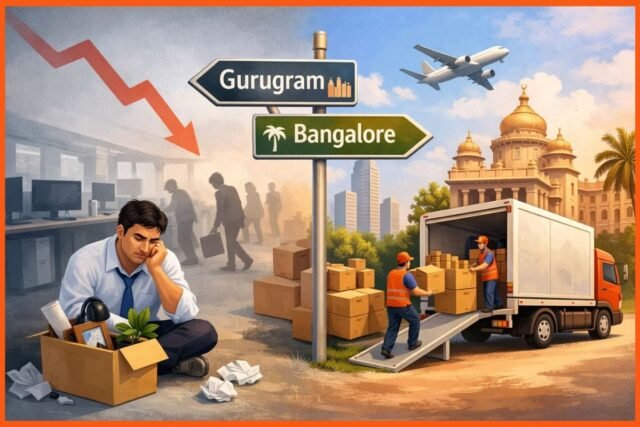
Myntra, a leading fashion e-commerce company, is consolidating its operations and laying off workers. The goal of the exercise is to relocate its satellite operations from Gurugram to Bengaluru. While some positions will be eliminated, others will be consolidated into bigger teams centred in Bengaluru. Fifty people from the supplier team in Gurugram would be affected by the layoffs and relocation.Why Myntra is Moving it Ops to Bangalore?Teams will be relocated in an effort to improve coordination, streamline internal processes, and centralise operations.  The affected employees would be provided with severance pay, outplacement services, and extended insurance coverage by the Walmart-backed marketplace. Artificial intelligence (AI) deployment and performance have nothing to do with the layoffs and relocation.The three co-founders of Myntra—Mukkesh Bansal, Ashutosh Lawania, and Vineet Saxena—started the company in 2007 with the goal of creating an online marketplace where independent vendors could offer clothing and accessories. For $240 million, Flipkart bought the Bengaluru-based business in 2014. Net profit for Flipkart’s fashion e-commerce division increased by 18 times to INR 548 Cr in FY25, from INR 31 Cr the year before. After coming in at 5,122 Cr in FY24, the company’s operational revenue increased to 6,043 Cr, an increase of…  ​Read MoreStartupTalky- Business News, Insights and Stories

How an Assam startup is rethinking sustainable beauty

How an Assam startup is rethinking sustainable beauty

India’s beauty and personal care industry has been booming, but it is also under scrutiny. Consumers are increasingly questioning the environmental cost of cosmetics and the chemicals that go into everyday self‑care. Across the country, a new generation of entrepreneurs is responding with brands rooted in sustainability, science, and transparency.The Bath Science, launched in 2022 by Dr Geetima Deka, is one of Assam’s young ventures rethinking personal care. The founder’s mission is to redefine luxury by transforming waste into wellness — upcycling stale flowers, fruit waste, and food by‑products into functional skincare ingredients. Rooted in science and circular sustainability, the brand positions itself as “zero‑waste, zero‑tox”, with products designed to be safer for both people and the planet.From Idea to ImpactGeetima describes her decision as both personal and purposeful. “I wanted to build something meaningful, something that could turn waste into value and make self‑care safer for people and the planet,” she says. That conviction became the foundation of The Bath Science.“Our uniqueness lies at the intersection of science and circular sustainability,” she explains. By upcycling discarded materials into skincare ingredients, The Bath Science aims to prove that waste can be a resource, not a liability.The early hurdles were familiar…  ​Read More​YourStory RSS Feed

9 Energy-Draining Habits That Secretly Exhaust You Every Day

9 Energy-Draining Habits That Secretly Exhaust You Every Day

Some days you sleep enough, eat reasonably well, and still feel oddly depleted by afternoon. It’s tempting to blame workload, weather, or luck. But often, the biggest drain isn’t a single major problem. It’s a set of small, repeatable habits that quietly tax your brain, time, and emotions—until “tired” becomes the default setting.Here are the most common energy-draining habits, why they work that way, and what to do instead.1) Starting the day on your phoneChecking messages, news, or social media the moment you wake up pushes your mind into reaction mode. You begin the day responding to other people’s priorities, which increases mental noise and makes it harder to focus later.Try this: Delay your phone by 20–30 minutes. Use that time for water, light movement, a quick plan for the day, or simply quiet.2) Constant multitaskingMultitasking feels productive, but it often forces your brain to switch contexts repeatedly. That switching costs energy and creates a “busy but not finished” feeling. Over time, it reduces attention span and increases fatigue.Try this: Work in single-task blocks. Even 25 minutes focused on one task, followed by a 5-minute break, can restore a sense of control.3) Skipping meals or surviving on quick sugarLong gaps…  ​Read More​YourStory RSS Feed

Bharat Taxi: A Cooperative Revolution in India’s Ride-Hailing Sector

Bharat Taxi: A Cooperative Revolution in India’s Ride-Hailing Sector

Union Home and Cooperation Minister Amit Shah officially launched Bharat Taxi on Thursday, February 5, 2026, marking a significant shift in India’s burgeoning ride-hailing industry. Positioned as the nation’s first cooperative-based platform, Bharat Taxi aims to empower drivers by transforming them into co-owners, thereby challenging the conventional gig-economy model prevalent among existing aggregators.A Driver-Centric Model with Zero CommissionThe cornerstone of Bharat Taxi’s appeal is its driver-centric approach. Unlike its competitors, the platform operates on a zero-commission model, ensuring that drivers, referred to as ‘Sarathis,’ retain 100% of the fare displayed on the app. Instead of per-ride commissions, drivers pay a flat daily access fee, reported to be around ₹30. This model is designed to significantly increase driver earnings, a critical factor given ongoing protests by drivers against the alleged irregular wages and regulatory lapses of private aggregators.Furthermore, Bharat Taxi pledges surge-free pricing, promising more predictable and potentially lower fares for passengers. While initial comparisons show mixed results, with some bike and sedan fares occasionally higher than those of Uber or Ola, the absence of surge pricing is expected to make Bharat Taxi more competitive during peak hours. The platform claims its fares could be up to 30% lower than private…  ​Read MoreStartupTalky- Business News, Insights and Stories
13,000FansLike
9,000FollowersFollow

Most Popular