Home Blog Page 32

Airtel vs Jio: How India’s telecom market became a duopoly

Airtel vs Jio: How India’s telecom market became a duopoly

India is one of the largest telecom markets in the world, with more than 1.2 billion mobile subscribers. Data prices are among the lowest globally, usage continues to rise, and 5G adoption is accelerating rapidly.Yet structurally, the market has narrowed to just two serious players. Reliance Jio and Bharti Airtel together control over 80% of mobile revenue, a share projected to rise to around 85% by FY28. Other operators, including Vodafone Idea, now operate at the margins.This outcome was not designed by policy. It emerged from years of capital intensity, price wars, and technology transitions that only two companies could survive!Scale Vs profitabilityOn the surface, Jio looks dominant. It has around 470 million mobile subscribers and continues to add users faster than Airtel, which has roughly 390 million. However, subscriber count is only half the story. Airtel consistently earns more per user. Its ARPU sits in the Rs 250–256 range, compared to Jio’s Rs 210–215. This difference reflects two distinct strategies. Jio optimises for reach and volume. Airtel focuses on value and profitability. Both approaches work, but they create very different economics How Jio reshaped the marketJio entered telecom late, but that late entry proved decisive. Without legacy 2G or…  ​Read More​YourStory RSS Feed

BlackBuck Q3: Posts ₹32 Cr Profit, Revenue Zooms 50% YoY

BlackBuck Q3: Posts ₹32 Cr Profit, Revenue Zooms 50% YoY

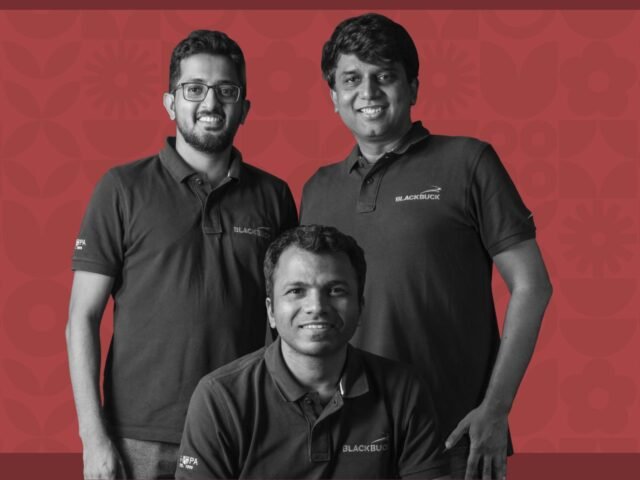
Logistics company BlackBuck maintained its profitability streak in the third quarter of FY26 (Q3 FY26), posting a consolidated net profit of ₹31.7 Cr as against a loss of ₹48 Cr in the year-ago period. On a sequential basis, this marked a near 9% increase from ₹29.2 Cr. Operating revenue surged 50% YoY and 14% QoQ to ₹171.8 Cr. Including other income of ₹16.5 Cr, the company’s total income during the quarter under review stood at ₹188.3 Cr. Truck operator services raked in the highest revenue at ₹168.7 Cr (up 50% YoY). Lending business’ revenue recorded a more than 2X YoY jump to ₹3.3 Cr. In terms of profitability contribution, truck operator services, which is BlackBuck’s core business segment, posted a profit of ₹50 Cr, up 56% YoY. The lending vertical raked in a profit of ₹8.1 Lakh during the quarter as against ₹98.5 Lakh in the year-ago period. Important to mention that the company incurred a one-time share-based payment expense of ₹69.4 Cr in the year-ago quarter. BlackBuck’s EBITDA surged 49% YoY to ₹44.8 Cr during the quarter under review. Meanwhile, expenses for the quarter rose 52% YoY to ₹142 Cr. The company also incurred an exceptional item cost of…  ​Read MoreInc42 Media

The Next Big Startup Hubs: Inside India’s New Innovation Engines

The Next Big Startup Hubs: Inside India’s New Innovation Engines

For nearly two decades, India’s startup story has centred around three cities — Bengaluru, Delhi NCR, and Mumbai — which have concentrated most of the country’s capital, talent, and ambition. Together, they attracted the bulk of venture funding and became default launchpads for founders. In fact, according to Inc42’s Annual Indian Startup Trends Report 2025, Delhi leads the Indian ecosystem in producing the most listed technology startups. But, realities are changing now. Funding activity in the Mumbai & Delhi NCR regions slowed, with investments either falling or staying flat. Not just this, regions like Hyderabad, Pune and Jaipur are being seen as the upcoming startup hubs. According to Inc42’s investor survey, 2025, 45% of investors identified Hyderabad as the next major epicentre of India’s startup revolution, followed by Pune (20%) and Jaipur (10%). Further, more than 56% investors see tier II-III purchasing power as the next consumer growth engine. The Playbook For The New Startup Hubs Over the past few years, policy nudges, state-led startup missions, and infrastructure investments have started pushing entrepreneurial activity beyond the traditional metro cities. From Coimbatore and Indore to Jaipur and Kochi, tier II and III cities are no longer just talent back-offices. Lower operating…  ​Read MoreInc42 Media

Ishaan Tharoor Among 300 Laid Off as Washington Post Cuts Jobs

Ishaan Tharoor Among 300 Laid Off as Washington Post Cuts Jobs

Massive layoffs have taken place at the Washington Post, a news organisation with a rich history and considerable influence in the US. As part of a massive reorganisation that has abolished entire divisions, the newspaper fired about a third of its employees on 4 February. And as a result of this change, a number of overseas bureaus were closed.Many people, including unions representing journalists and other media veterans, as well as political figures and those fighting for press freedom, have spoken out against these layoffs. One of the most substantial reductions in the Post’s almost 150-year history, the layoffs impacted hundreds of staff across editorial and business operations.Reasons for the LayoffsThe layoffs brought to light the increasing political, financial, and technological challenges that legacy media organisations are facing. Digital disruption, shifting consumer behaviour, and the decline of print reading were additional key factors in the layoffs. Ishaan Tharoor, a prominent foreign affairs writer for the Post and the son of Congress lawmaker Shashi Tharoor, was one of the people let go. Ishaan Tharoor appeared to have posted a photo of a newsroom on X, complete with a sign that stated, “Democracy Dies in Darkness.”He tagged the photo with the words…  ​Read MoreStartupTalky- Business News, Insights and Stories

D2C Nutrition Brand Good Monk Raises ₹33 Cr at ₹175 Cr Valuation

D2C Nutrition Brand Good Monk Raises ₹33 Cr at ₹175 Cr Valuation

D2C nutrition brand Good Monk has raised ₹33 Cr (about $3.6 Mn) in its pre-Series A funding round at a valuation of ₹175 Cr (about $19.5 Mn). The round was led by RPSG Capital Ventures, with participation from Sharrp Ventures, Hyperscale Ventures, and the families of cofounders. The D2C brand, which offers nutritional mixes that claim to offer preventive healthcare benefits, will use the funds toward research and development for new products and deepening distribution in tier II & III markets through increased brand awareness.  Good Monk was founded in 2022 by husband and wife duo Amarpreet Singh Anand and Sahiba Kaur. The Bengaluru-based brand claims to have seen 25X growth in the last 18 months.  Good Monk offers a range of dietary supplements focussed on gut health, immunity and weight loss, along with drink mixes and plant-based protein powders. It aims to become a daily part of home-cooked food by fortifying existing diets through its mixes that add a layer of nutrition without changing the taste of the dishes. It is now exploring new formats through which nutrition can be introduced to everyday diets.  “Preventive health is a growing category and as people become more aware of its importance,…  ​Read MoreInc42 Media

Digital Striker Raises $1 Million from Foxhog Ventures to Boost Its Market in Optical Fiber Industry

Digital Striker Raises  Million from Foxhog Ventures to Boost Its Market in Optical Fiber Industry

Digital Striker Private Limited, an optical fiber tools and equipment company founded by Priyanka, has raised $1 million (approx. ₹8.5 crore) from Foxhog Ventures, the USA-based venture capital firm led by CEO, Mr. Tarun Poddar. The funding will be used to set up India’s first manufacturing unit for optical fiber tools and equipment, a space currently dominated entirely by Chinese imports.The Problem Digital Striker Is SolvingIndia’s optical fiber industry is 100% dependent on China for tools and equipment products essential for building and maintaining the country’s digital infrastructure. Currently, only 35% of India’s mobile towers are connected through fiber, signaling massive untapped potential. Despite this, not a single company in India manufactures tools like fiber strippers, cleavers, VFLs, power meters, or splicing machines locally. This dependency has created a chain of challenges 100% advance payment requirements, 3-month delivery cycles via sea freight, bulk order mandates, and no local service support.What the Funding Will DoThe $1 million investment will be deployed across two key areas. Approximately ₹5-6 crore will go toward setting up the manufacturing plant, hiring talent, and establishing offices in key metro cities across India. The remaining ₹4-5 crore will support import operations to fulfill existing demand while local…  ​Read MoreStartupTalky- Business News, Insights and Stories

Gaurav Verma Shares the Business Priorities Driving PharmEasy’s Expansion Beyond Online Pharmacy

Gaurav Verma Shares the Business Priorities Driving PharmEasy’s Expansion Beyond Online Pharmacy

In this exclusive interaction with StartupTalky, Gaurav Verma, Head – B2C at PharmEasy (API Holdings), shares insights on how the company is evolving from an online pharmacy into a full-stack healthcare platform. He discusses his focus on sustainable growth, operational efficiency, and customer trust while operating in India’s price-sensitive and highly regulated healthcare market.Verma highlights the key verticals driving revenue, from medicines and diagnostics to consultations and care services, and explains how data, technology, and a loyalty-led approach are shaping decisions and improving margins. He also outlines PharmEasy’s long-term vision of creating a trusted, integrated healthcare ecosystem accessible across India. StartupTalky: To start with, could you briefly share your role as Chief Business Officer at PharmEasy and the key business priorities you focus on today?Mr. Gaurav Verma: As Chief Business Officer at PharmEasy, my role is to drive sustainable growth while staying true to our purpose of making healthcare more affordable and accessible across India. I oversee business strategy across key verticals, with a strong focus on execution, partnerships, and ensuring growth is backed by solid operational and financial discipline.Over the past year, we’ve strengthened our operating model by introducing sharper review mechanisms and a more data-led approach to execution. This…  ​Read MoreStartupTalky- Business News, Insights and Stories

After The Boom: Why India’s UPI Players Are Under Strain

After The Boom: Why India’s UPI Players Are Under Strain

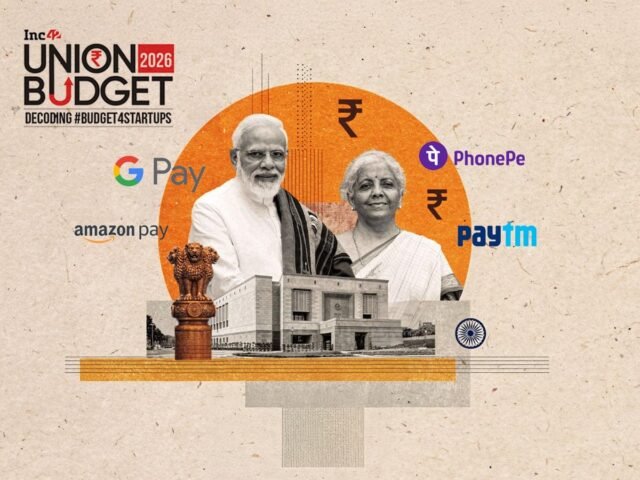
India’s UPI ecosystem is at a crossroads. As transactions volume and value reach record levels, the government is gently pushing UPI players towards self-reliance. The clearest signal is that the central government’s incentive outlay towards UPI and RuPay in FY27 has shrunk to INR 2,000 Cr, even as the ecosystem has grown to new heights. UPI transactions recorded a 32.5% YOY growth in volume terms in 2025 at 228 Bn transactions as against 46.2% YOY spike in 2024 at 172 Bn transactions. With growing international presence, it’s not just the Indian market that has benefitted from this wave. So the fact that the central government is continuing to support this growth through public spending is great, right? It’s not as simple as that. As per Union Budget 2026 documents, the government spent INR 2,196 Cr for incentives for FY26, so at first glance the allocation for the forthcoming year seems more or less on par. But in the previous year’s budget, the central government had initially allocated INR 437 Cr for incentives. Effectively, it ended up spending 5X this figure in FY26. Despite knowing the gap in the allocation and actual spending in the previous year, the government is holding…  ​Read MoreInc42 Media

Amazon expands Amit Agarwal’s role to lead global selling partner services

Amazon expands Amit Agarwal’s role to lead global selling partner services

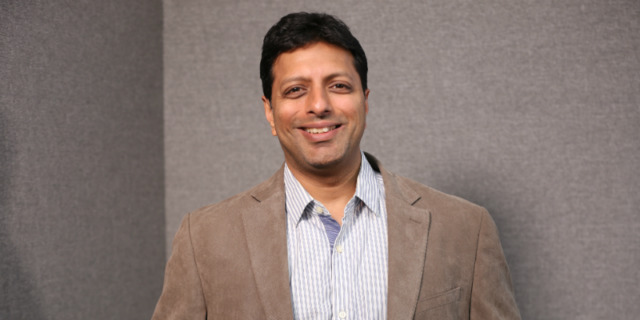
Amazon has expanded the responsibilities of long-time executive Amit Agarwal, placing him in charge of the company’s Worldwide Selling Partner Services (SPS) organisation—a core business that manages Amazon’s global third-party seller ecosystem. The move follows the transition of Dharmesh Mehta, who led SPS for more than a decade, into a technical advisor role reporting directly to Amazon CEO Andy Jassy.Agarwal, currently Senior Vice President for International Emerging Stores, will continue to oversee Amazon’s marketplace operations across a group of high-growth countries while taking on leadership of SPS. He will report to Doug Herrington, CEO of Worldwide Amazon Stores.The expanded mandate positions Agarwal at the centre of Amazon’s marketplace strategy. SPS oversees the tools, infrastructure, and services used by millions of third-party sellers globally, including onboarding, payments, logistics integrations, advertising products, compliance systems, and seller support. Third-party sellers now account for the majority of units sold on Amazon’s platform, making SPS a critical driver of both growth and profitability.Agarwal is one of Amazon’s longest-serving executives, having joined the company in 1999. Over more than two decades, he held leadership roles across engineering, retail, and international expansion. He is widely associated with Amazon’s push into emerging markets and played a key role…  ​Read More​YourStory RSS Feed

Urban Company and the trust-first playbook for services

Urban Company and the trust-first playbook for services

Before organised platforms emerged, India’s home services market operated almost entirely through informal labour.Customers routinely allowed unknown service providers into their homes without background checks, fixed pricing, or accountability. Price negotiations happened inside the home, disputes were common, and incidents of theft or impersonation were not rare.This made home services a high-fraud category. One poor experience could permanently stop repeat usage. The core barrier was not discovery or convenience. It was fear. Trust was not an add-on feature. It had to be the product itself.Why early marketplaces failedMost early platforms followed a thin marketplace model. They listed professionals, facilitated bookings, and relied on ratings to manage quality. This scaled supply quickly but left trust largely unmanaged. Ratings were easy to game, onboarding checks were superficial, and impersonation at the doorstep remained a major risk.Urban Company took a different route. Instead of maximising listings, it focused on controlling quality end to end. The company moved from being a simple intermediary to a full-stack operator, owning onboarding, training, verification, and post-service accountability.This slowed growth and increased costs, but it directly addressed the trust deficit in the category.Turning vetting into a trust signalUrban CompanyUrban Company treated onboarding as a filtration process, not a…  ​Read More​YourStory RSS Feed

13,000FansLike
9,000FollowersFollow

Most Popular